The best home care for sunburn is simple: cool the skin, keep it moisturized with a gentle lotion such as aloe vera, take an over-the-counter pain reliever if you need one, drink extra water and stay out of the sun while it heals. Most mild sunburns feel better within a few days and peel within a week. A burn with large blisters, fever, chills or confusion is a different matter and needs a doctor.
The short version
- Get out of the sun, then cool the skin with cool showers, baths or damp compresses.
- Apply a gentle moisturizer with aloe vera or soy while the skin is still slightly damp.
- Ibuprofen or aspirin can ease pain and swelling (no aspirin for children and teens). Drink extra water.
- Skip butter, petroleum jelly, oils and numbing "-caine" sprays on a fresh burn. Do not pop blisters.
- Blisters over a large area, fever, chills, headache, confusion or vomiting mean: see a doctor.
Step by step: what to do for a sunburn
These steps follow the sunburn advice of the American Academy of Dermatology.
- Get out of the sun. Go indoors or into deep shade as soon as you notice your skin turning pink. Sunburn keeps developing for hours after exposure, so it often looks worse in the evening than it did at the beach.
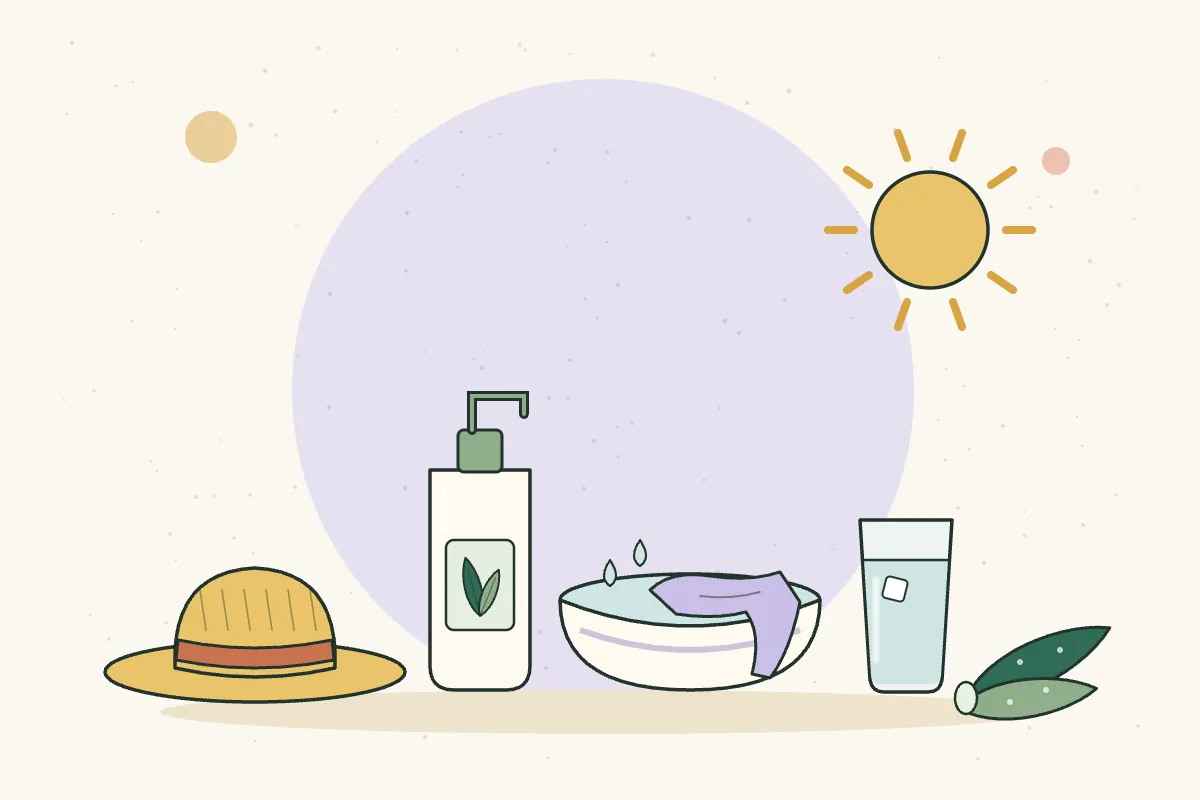
- Cool the skin. Take frequent cool baths or showers, or lay a cool, damp washcloth on the burned area for 10 to 15 minutes at a time. Do not put ice directly on the skin.
- Moisturize while damp. Gently pat yourself dry, leaving a little water on the skin, then apply a moisturizer. Products with aloe vera or soy feel soothing. Repeat several times a day.
- Ease pain and swelling. If it is safe for you, an over-the-counter anti-inflammatory such as ibuprofen or aspirin can reduce discomfort, redness and swelling. Follow the label. Do not give aspirin to children or teenagers.
- Calm itchy or sore spots. A thin layer of over-the-counter 1% hydrocortisone cream can help for a few days on particularly uncomfortable areas.
- Drink extra water. A sunburn draws fluid to the skin's surface and away from the rest of the body. Keep a water bottle nearby for the next couple of days.
- Protect the healing skin. Stay out of the sun until the burn has healed. When you go outside, wear loose, tightly woven clothing that covers the burned skin.
Home remedies that help, and some that do not
Worth trying
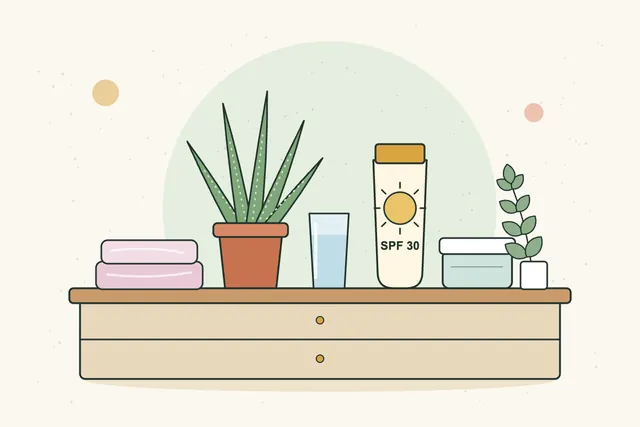
- Aloe vera gel. Feels cooling and is widely used. The research on faster healing is limited, but as a moisturizer it is a reasonable choice. Pick a plain gel without alcohol or added fragrance, or use gel from a fresh leaf after testing a small spot.
- Cool compresses. Simple and effective for heat and stinging. A clean cotton cloth soaked in cool water works fine.
- Colloidal oatmeal bath. Finely ground oatmeal in a cool bath can calm itching, especially once peeling starts. Pat dry gently afterward.
- Loose cotton clothing and cool sheets. Less friction means less pain, especially at night.
Better to skip
- Butter, cooking oils and coconut oil. Old kitchen remedies that do not cool the skin and may hold in heat on a fresh burn.
- Petroleum jelly and other oil-based ointments. They can trap heat in the skin. Save them for later, if at all, when the skin is dry and peeling, and use a gentle lotion first.
- Benzocaine and lidocaine sprays. Numbing "-caine" products can irritate the skin or cause an allergic reaction.
- Vinegar, lemon juice, toothpaste and undiluted essential oils. These are acidic or irritating and sting on damaged skin. Our article on apple cider vinegar remedies explains where vinegar makes sense, and burned skin is not one of those places.
- Ice and ice packs straight on the skin. Too cold for already injured skin.
Blisters and peeling
Blisters mean a deeper, second-degree sunburn. Leave them intact: the blister roof protects the skin underneath from infection. If one breaks, wash the area gently with mild soap and water and cover it with a non-stick bandage. When the skin starts peeling a few days later, keep moisturizing and let the flakes come off on their own instead of pulling at them.
Sun poisoning: when a sunburn needs a doctor
"Sun poisoning" is not a medical diagnosis, but people use it for a severe sunburn that affects the whole body, and sometimes for an itchy sun rash. Severe sunburn can come with dehydration and heat illness, and it needs medical care.
Safety first
- See a doctor or urgent care if blisters cover a large area, or you have fever, chills, headache, nausea or vomiting, dizziness or fainting, confusion, or signs of dehydration such as very little urine, extreme thirst or a dry mouth.
- Call 911 for confusion, fainting, a very high body temperature or hot skin without sweating. These can be signs of heat stroke.
- Watch for infection: increasing pain, swelling, pus, red streaks spreading from the burn or a fever a few days later.
- Babies and children: call your pediatrician for any sunburn in a baby under 1 year, and for a child with blisters, fever, lethargy or pain that does not ease.
- Medicines matter. Some antibiotics, diuretics, acne treatments and other drugs make skin burn much faster. If you burned unusually easily, ask your pharmacist. Check with a doctor before taking pain relievers if you have kidney problems, stomach ulcers, take blood thinners or are pregnant.
Prevention: the next sunny day
Every sunburn damages skin cells and raises the long-term risk of skin cancer, including melanoma. The CDC and the AAD agree on the basics:
- Use a broad-spectrum, water-resistant sunscreen with SPF 30 or higher on all uncovered skin. Apply it about 15 minutes before going out, and reapply at least every 2 hours and after swimming or sweating.
- Seek shade during the middle of the day, when UV rays are strongest.
- Wear a wide-brimmed hat, UV-blocking sunglasses and clothing that covers your arms and legs.
- Remember that water, sand and snow reflect UV rays, and that you can burn on cloudy days.
Frequently asked questions
How long does a sunburn last?
Mild sunburns usually stop hurting within 3 to 5 days, with peeling for a few days after. Blistering burns can take a week or two to heal. A burn that is not improving after several days should be checked.
Should I put aloe vera from the plant on a sunburn?
You can. Cut a leaf, let the yellow sap drain off, and test the clear gel on a small spot first, because some people react to it. Keep aloe out of open blisters.
Is it okay to go back in the sun with a sunburn?
Try not to. Burned skin is already damaged and burns again easily. Stay in the shade and cover up completely until it has healed.
Sources
- American Academy of Dermatology: How to treat sunburn
- Mayo Clinic: Sunburn, diagnosis and treatment
- Centers for Disease Control and Prevention: Sun safety and skin cancer prevention
- Cleveland Clinic: Sun poisoning
- National Center for Complementary and Integrative Health: Aloe vera
Comments
No comments yet. Tried this at home? Tell us how it went.