The fastest way to get rid of ants in the house is to find where they come in, clean up what they are after, and let a slow-acting bait do the rest. Spraying the ants you can see feels good but barely touches the colony, which sits outside or inside a wall and keeps sending new workers. With a little patience, most kitchen ant problems are over within one to two weeks.
The short version
- The ants you see are a small fraction of the colony. Killing them on sight rarely solves the problem.
- Wipe up the scent trail with soapy water and remove every easy food and water source.
- Slow-acting baits that workers carry home are the most effective home option.
- Seal the entry point once the trail has stopped.
- Large black ants near damp wood can be carpenter ants, which deserve a closer look.
Why ants show up indoors
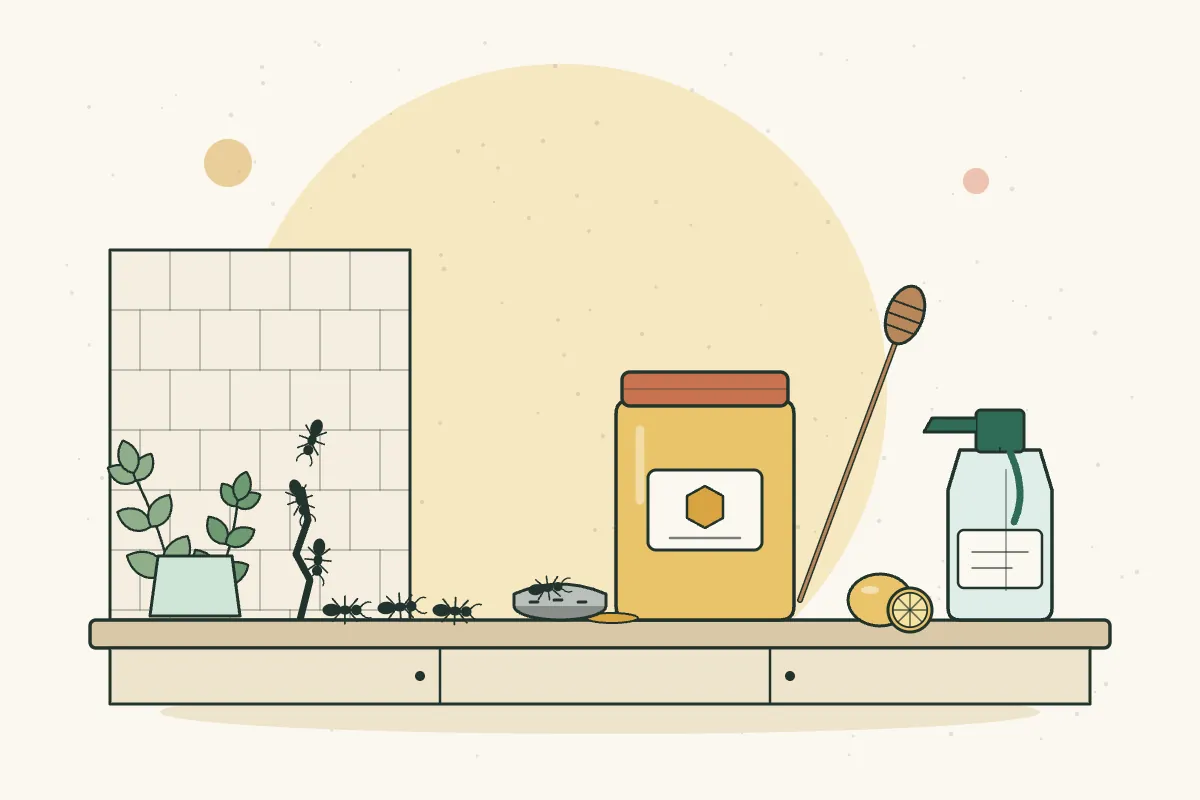
Most indoor ants are foragers from a colony outside. A single scout finds something sweet, greasy or protein-rich, then lays a chemical trail on the way back. Within hours, dozens of workers follow that trail to the same crumb, sticky jar or pet bowl. Ants also look for water, which is why they often appear around sinks, dishwashers and bathroom pipes, especially during hot, dry spells or after heavy rain floods their nests.
That trail is the key to everything. As long as it exists and leads to food, more ants will arrive.
Step by step: clearing a kitchen ant trail
- Watch before you wipe. Spend a few minutes following the line of ants in both directions. You want to know two things: what they are eating and where they come in (a window frame, a gap behind the backsplash, an outlet, a crack along the floor).
- Remove the reward. Clean up the food source and store sugar, honey, cereal, syrup and pet food in containers with tight lids. Rinse sticky bottles, empty the trash and do not leave pet food sitting out for hours.
- Place bait before you clean the trail. If you plan to use bait, set it right next to the trail first. The ants should find it easily, take it, and carry it home.
- Let the bait work. Expect more ants at the bait for a day or two. That is a good sign. Do not spray them, and do not clean around the bait station. Activity usually drops within several days.
- Erase the scent trail. Once activity has stopped, wash the route with warm soapy water or a mix of equal parts white vinegar and water. This removes the chemical markers so new scouts do not pick up the old path.
- Seal the entry point. Caulk small cracks around windows, baseboards and pipes. Trim plants and mulch away from the foundation so branches do not act as bridges.
Do baits beat home remedies?
For most common household ants, yes. University pest management programs such as the University of California Statewide IPM Program describe baits as the most effective approach for ants that trail indoors, because the workers share the bait with the rest of the colony, including the queens. Fast-killing sprays only kill the foragers that touch them.
Many store baits use boric acid at a low concentration mixed into sugar or protein. You can also make a simple version at home: mix roughly 1 teaspoon of boric acid with about 1 cup (240 ml) of sugar water, soak cotton balls and set them in a shallow lid along the trail. Keep the concentration low. If the bait is too strong, ants die before they get home and the colony survives.
If ants ignore a sweet bait, they may be after protein or grease at that time of year. Try a dab of peanut butter mixed with a little boric acid in a separate lid, or switch to a commercial protein bait.
Safety first
- Boric acid is not harmless. It is toxic if swallowed in larger amounts. Use enclosed bait stations or place homemade bait where children and pets cannot reach it, and label any jar you mix it in.
- Diatomaceous earth: use only food-grade product, apply a thin dusting into cracks, and avoid breathing the dust.
- Essential oils: peppermint and other oils can be toxic to cats and dogs. Do not soak surfaces where pets walk or lie.
- Never mix cleaners. Vinegar and bleach together release dangerous gas.
Home remedies: what they can and cannot do
Vinegar and soapy water
Both are excellent for wiping out scent trails and for killing ants on contact. They do not reach the colony. Use them as the cleanup step, not as the main treatment.
Diatomaceous earth
This fine powder of fossilized algae damages the waxy outer layer of insects so they dry out. A light dusting in cracks, behind appliances and along entry points can help. It only works while dry and when ants walk through it, so thick piles in open areas are less useful than thin layers in hidden gaps.
Peppermint, cinnamon and other scents
Strong smells may disrupt a trail for a short time, and some people like wiping counters with a few drops of peppermint oil in soapy water. The effect is temporary, and there is little evidence that scents keep ants away for good.
Coffee grounds, chalk and baby powder
These come up often online. Ants may avoid crossing a line of powder for a while, but these tricks do not affect the nest and tend to fail once the line is broken or wet.
Know which ant you are dealing with
Most kitchen invaders in the US are small: odorous house ants (which smell a bit like rotten coconut when crushed), pavement ants and Argentine ants. They are nuisance pests and respond well to baits and cleanup.
Two situations call for a different approach:
- Carpenter ants are large, often black or black and red, and nest in damp or damaged wood. Piles of fine sawdust-like material, called frass, near windows, decks or the attic can point to a nest. They do not eat wood but they hollow it out, and their presence usually means a moisture problem.
- Fire ants in the southern states deliver painful stings and build mounds in yards. Treat them outdoors with products labeled for fire ants, and keep children and pets away from mounds.
Prevention that pays off
Wipe the counters every evening, rinse dishes before leaving them in the sink, and store sweet foods in sealed containers. A clean, dry kitchen is less interesting to ants than any repellent you could spray.
When to call a professional
Call a licensed pest control company if you suspect carpenter ants or termites, if ants keep coming back after several weeks of baiting and sealing, or if you see swarms of winged ants indoors in large numbers. A professional can identify the species, find nests inside walls and treat them in a targeted way.
Ants rarely come alone as a problem. If you are already sealing gaps, the same work helps against other crawlers, see our guide on how to keep spiders out.
Frequently asked questions
Why are there suddenly ants in my house after rain?
Heavy rain can flood shallow nests, and long dry spells push ants indoors to find water. In both cases they look for a dry, stable place with food nearby, which a kitchen offers.
How long does it take for ant bait to work?
You often see fewer ants after a few days, and most trails stop within one to two weeks. Keep the bait in place until no ants visit it for several days.
Should I kill the ants I see at the bait?
No. Those workers are carrying the bait back to the colony. Leave them alone until the trail stops on its own.
Is it safe to use ant bait in a kitchen?
Enclosed bait stations are designed for indoor use when you follow the label. Keep them off food prep surfaces, out of reach of kids and pets, and wash your hands after handling them.
Sources
- University of California Statewide IPM Program: Pest Notes, Ants
- US Environmental Protection Agency: Citizen's Guide to Pest Control and Pesticide Safety
- National Pesticide Information Center: Boric Acid General Fact Sheet
- Texas A&M AgriLife Extension: Carpenter ants and red imported fire ants
Comments
No comments yet. Tried this at home? Tell us how it went.