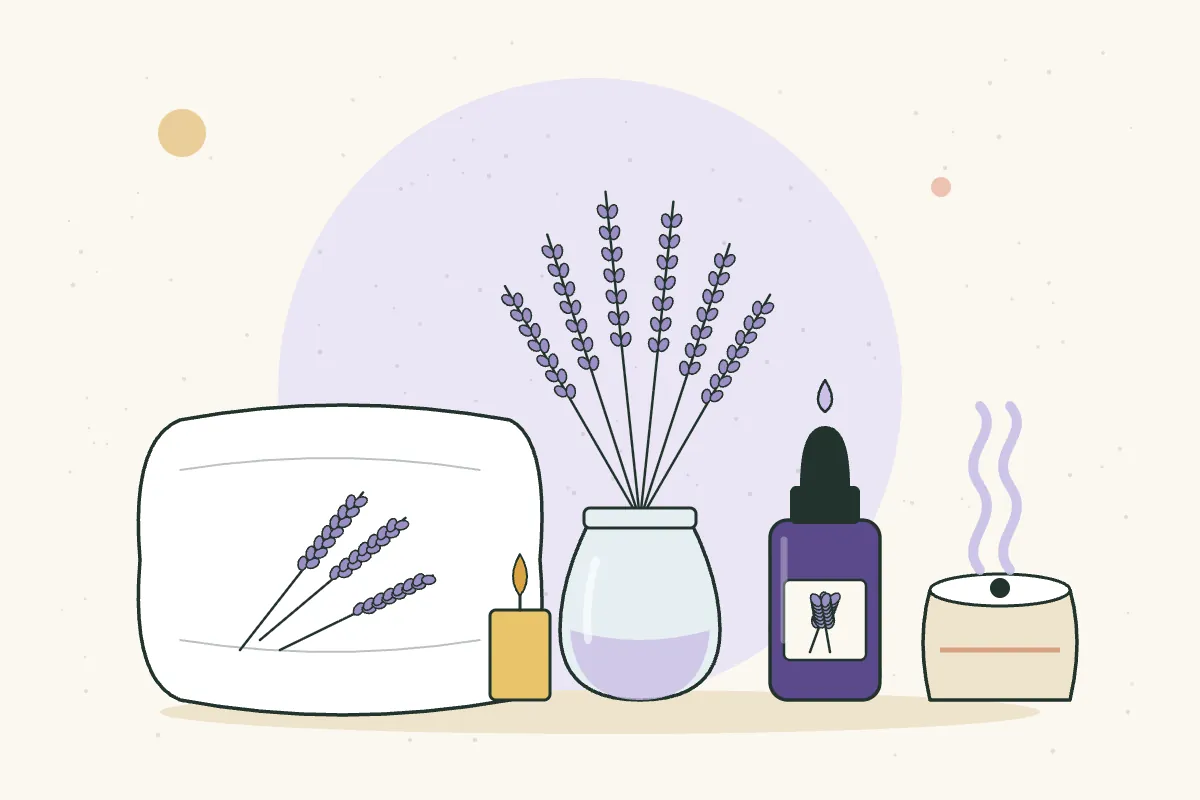
Lavender oil is best known as a calming scent, and that is where the evidence is strongest: smelling it may help some people relax and sleep a bit better, although studies are small and mixed. A specific oral lavender preparation called Silexan has been tested for anxiety with encouraging results, but that is a standardized capsule, not the essential oil in your cupboard, which should never be swallowed. On skin, lavender oil needs proper dilution, and around cats and other pets it calls for caution.
The short version
- Inhaled lavender may modestly help with relaxation and sleep quality. The evidence is limited.
- Oral Silexan capsules have been studied in anxiety disorders. Bottled essential oil is not the same thing and is not for drinking.
- Dilute to about 1 to 2 percent before putting it on skin, and do a patch test.
- Do not diffuse it in rooms with cats, birds or other small pets for long periods.
- It does not replace treatment for insomnia, anxiety or depression.
Sleep
A number of small trials, often in hospital patients, students or older adults, found that people who inhaled lavender before bed reported somewhat better sleep quality than people who did not. Many of these studies were short, could not hide the scent from participants, and used different oils and doses, so the results are hard to compare. The National Center for Complementary and Integrative Health describes the evidence on lavender aromatherapy as limited.
In practice, lavender works best as part of a wind-down routine: a regular bedtime, a cool dark room and less screen time. A scent you associate with relaxing can be a useful cue.
Stress and anxiety
Inhaled lavender
Studies of lavender aromatherapy before dental visits, surgery or medical procedures have shown small reductions in reported anxiety in some trials and no difference in others. It is a low-risk comfort measure, not a treatment.
Oral Silexan
Silexan is a standardized lavender oil extract made into capsules, usually at 80 mg a day. Several randomized controlled trials, many of them run in Germany and funded by the manufacturer, found that it eased symptoms of generalized anxiety disorder and milder anxiety compared with placebo over 6 to 10 weeks. In Germany it is approved as an herbal medicine for anxious restlessness. In the US, similar products are sold as dietary supplements, which means the FDA has not reviewed them for effectiveness.
The most common side effects were burping and mild stomach upset. Anyone who takes antidepressants, sedatives or other prescription drugs, or who is pregnant or breastfeeding, should talk to a doctor before trying it. And none of these findings apply to drinking drops of essential oil: concentrated oils can irritate the mouth and gut and are dangerous if swallowed by children. For other oils that are often recommended for mood, see our overview of essential oils for anxiety and depression.
When to see a doctor
Talk to a doctor if poor sleep lasts more than a few weeks or affects your daytime life, if worry or panic attacks keep you from normal activities, if you feel down most days for two weeks or more, or if you snore loudly and wake up gasping. If you have thoughts of harming yourself, call or text 988 (the Suicide and Crisis Lifeline) or 911 right away.
Skin use
Lavender oil is a common ingredient in lotions and massage oils. There is little solid evidence that it heals wounds, acne or burns, and it should not be used on broken skin or fresh burns. If you use it for massage or a scented body oil, dilute it.
- Pick a carrier. Use a plain oil such as jojoba, sweet almond or sunflower.
- Measure. For a 1 percent blend, mix about 5 to 6 drops of lavender oil into 1 fl oz (30 ml) of carrier. For 2 percent, about 10 to 12 drops. Use 1 percent or less for the face.
- Patch test. Rub a little on the inside of your forearm and wait 24 to 48 hours. Redness, itching or bumps mean do not use it.
- Store it well. Lavender oil oxidizes when exposed to air, light and heat, and oxidized oil is more likely to cause allergic skin reactions. Keep bottles tightly closed in a cool, dark place and replace old oil.
A note on children
Case reports and laboratory studies have raised the question of whether repeated use of lavender and tea tree oil products might have hormone-like effects in prepubertal children. The link is not proven, but many pediatricians suggest caution with frequent use on young children's skin. Do not use essential oils on babies without asking your pediatrician.
Pets
Cats are especially sensitive to essential oils because their livers break down many of the compounds slowly. Concentrated oil on fur or skin, licked from surfaces, or inhaled from a diffuser in a closed room can make them sick. Dogs are less sensitive but can still react, and birds have very sensitive airways.
- Never apply lavender oil to a pet unless your vet tells you to.
- Diffuse only briefly, in a room the pet can leave, and never in a small closed space with a cat or bird.
- Watch for drooling, vomiting, wobbliness, trouble breathing or pawing at the face, and call your vet or an animal poison control line if you see them.
Household uses
- Linen spray. Mix 1/2 cup (120 ml) of water with 1 tablespoon of rubbing alcohol or vodka and 10 to 15 drops of lavender oil. Shake before each use, and test on a hidden spot of fabric first.
- Drawer and closet sachets. Small cotton bags of dried lavender buds make clothes smell fresh. They are often sold as moth repellents, but the effect is weak. Real moth control means cleaning clothes before storing them and keeping them in sealed containers.
- Freshen a vacuum or room. A few drops on a cotton ball in the vacuum bag (not in a bagless canister) gives a light scent while cleaning. More ideas in our guide to fixing a smelly vacuum.
- Grow your own. Lavender plants want full sun and dry soil, which makes them a garden plant more than a houseplant; see growing herbs indoors for easier windowsill options.
For mosquitoes and ticks, lavender oil is not a reliable repellent. The CDC recommends EPA-registered repellents instead.
Safety first
- Never swallow lavender essential oil, and keep bottles away from children. If a child swallows some, call Poison Control at 1-800-222-1222.
- Keep oil away from eyes. If it gets in, flush with water for 15 minutes.
- Ask your doctor or midwife before using essential oils during pregnancy.
- Lavender may add to the effect of sedatives and sleep medications.
Frequently asked questions
Can I put lavender oil on my pillow?
One or two drops on the corner of the pillowcase, or a light linen spray, is a common way to use it. Keep it away from your eyes, and skip it if you share the bed with a cat.
Is lavender oil safe to diffuse every night?
For most healthy adults, short sessions of 30 to 60 minutes in a ventilated room are reasonable. People with asthma can react to scents and should be careful.
Is drinking lavender tea the same as taking Silexan?
No. Tea made from dried lavender flowers contains far less oil, and Silexan is a specific standardized extract. Lavender tea is a pleasant drink, but the Silexan research does not apply to it.
Sources
- National Center for Complementary and Integrative Health (NCCIH): Lavender
- Meta-analyses of randomized trials on oral lavender oil preparation Silexan for anxiety
- National Institute of Environmental Health Sciences: Research on lavender and tea tree oil and prepubertal gynecomastia
- ASPCA Animal Poison Control: Essential oils and pets
- Centers for Disease Control and Prevention: Preventing mosquito bites, choosing a repellent
- 988 Suicide and Crisis Lifeline
Comments
No comments yet. Tried this at home? Tell us how it went.