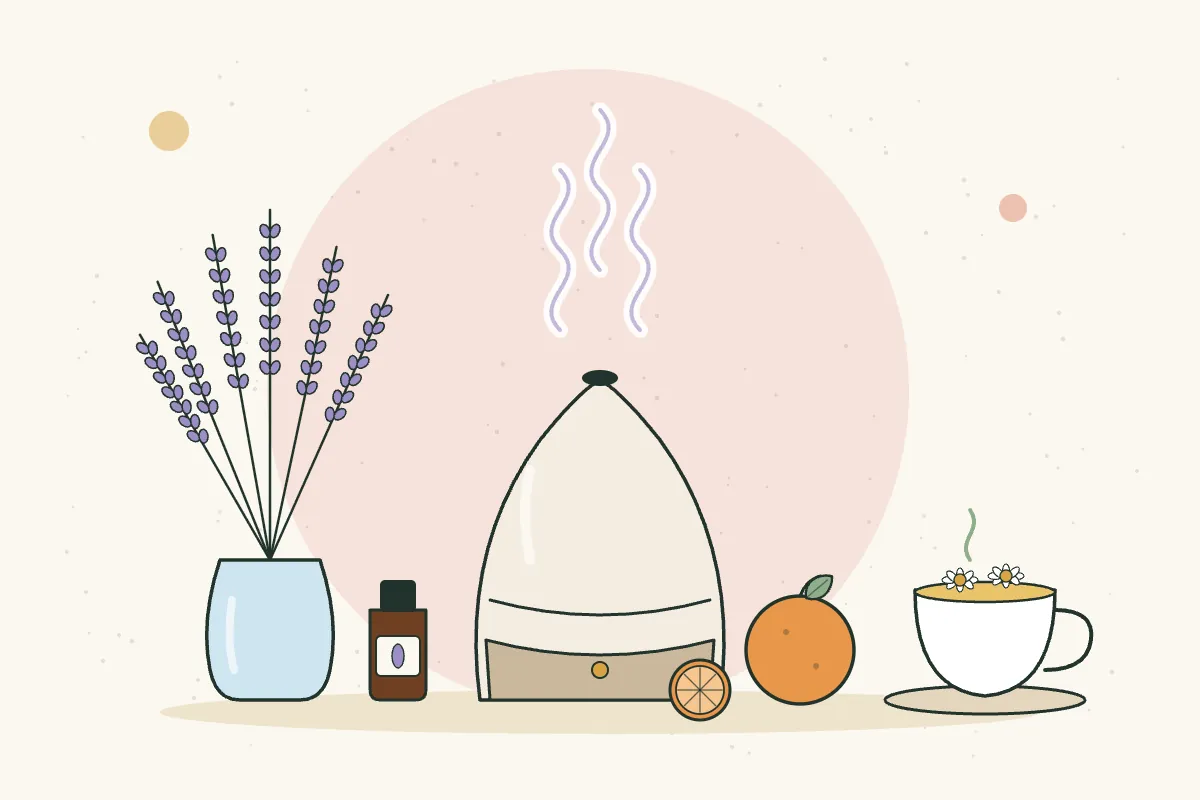
If you are looking for one essential oil to try for anxious moments, lavender has the most research behind it, followed by bergamot, sweet orange and Roman chamomile. The evidence is modest: in small studies, inhaling these scents lowered short-term anxiety a little, for example before a medical procedure. No essential oil treats depression. If you feel low most days, lose interest in things you used to enjoy, or have thoughts of harming yourself, please reach out for professional help.
The short version
- Lavender is the best-studied oil for anxiety. Bergamot, sweet orange and Roman chamomile have smaller bodies of research.
- Aromatherapy may take the edge off everyday stress and situational nerves. It is a comfort measure, not a treatment for an anxiety disorder.
- Depression needs real care: talk therapy, sometimes medication, and support. In the US, call or text 988 any time if you are in crisis.
- Diffuse or inhale oils, dilute them for skin, never swallow them, and keep them away from cats, small children and pregnant women unless a doctor agrees.
If you are struggling right now
Call or text 988 to reach the 988 Suicide and Crisis Lifeline, available 24 hours a day in the US, or chat online through the Lifeline website. If you are in immediate danger, call 911.
What the research says about aromatherapy and anxiety
Aromatherapy studies are tricky. It is hard to hide a scent from participants, many trials are small, and expectations play a big role. Reviews of the research generally conclude that inhaled essential oils may reduce anxiety a little in specific situations, such as waiting for surgery, during dental visits or in labor, but the quality of the evidence is low to moderate.
That does not make aromatherapy useless. A calming ritual, a pleasant smell and a few slow breaths can genuinely help you feel steadier in a hard moment. It just means oils work best as one small piece of a bigger plan.
The oils with the most evidence
Lavender
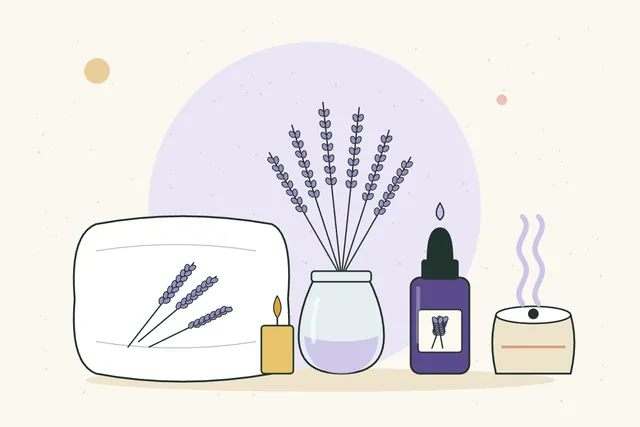
Lavender (Lavandula angustifolia) is the most researched essential oil for anxiety and sleep. Inhaled lavender has lowered anxiety scores in several small trials, and its linalool content is thought to have a calming effect. In Europe, a standardized lavender oil capsule has been studied as a medicine for anxiety. That is a pharmaceutical preparation made for swallowing under medical guidance, not the same as the essential oil bottle in your cupboard, which should never be swallowed. Read more in our guide to what lavender oil is good for.
Bergamot
Bergamot is a citrus oil with a bright, slightly floral scent. A few small studies found that inhaling it reduced self-reported anxiety or stress. Bergamot contains compounds that make skin very sensitive to sunlight, so never use it on skin that will see the sun within 12 hours, unless the label says "bergapten-free" or "FCF."
Sweet orange
Sweet orange oil has been tested in waiting rooms and during dental treatment, with modest calming effects. It is inexpensive and well liked by most people, which makes it an easy first choice for a diffuser.
Roman chamomile
Chamomile is better known as a tea, and chamomile extract has been studied for generalized anxiety with some positive results. The essential oil has less research but is a gentle, popular choice for relaxation blends. Avoid it if you are allergic to ragweed, daisies or related plants.
Others you will see recommended
Frankincense, ylang-ylang, clary sage, rose and neroli appear in many calming blends. They are generally safe to inhale, but the research behind them is thinner. Pick the scent you actually enjoy: a smell you dislike is unlikely to relax you.
How to use essential oils for calm
- Diffuse briefly. Add 3 to 5 drops to a water diffuser and run it for 30 to 60 minutes, then take a break. Keep the room ventilated and the diffuser out of reach of pets and children.
- Use a personal inhaler or tissue. Put 1 to 2 drops on a tissue or a cotton pad and take a few slow breaths when you feel tense. This keeps the scent away from others in the room.
- Combine with slow breathing. Breathe in through your nose for a count of 4 and out slowly for a count of 6, for two to three minutes. The breathing likely does as much as the scent.
- Dilute for massage. For a calming hand or shoulder massage, mix about 6 drops of essential oil into 1 ounce (30 ml) of a carrier oil such as sweet almond or jojoba, roughly a 1 percent dilution. Patch test on your inner arm first and wait 24 hours.
- Add it to a bedtime routine. A few drops on a tissue near (not on) your pillow can become a cue for winding down, alongside a dark room and a regular bedtime.
Safety first
- Never swallow essential oils or add them to drinks. They are highly concentrated and can be toxic.
- Dilute before skin contact. Undiluted oils can cause burns, rashes and allergies that develop over time.
- Cats and other pets: cats are especially sensitive to essential oils, including in diffusers. Birds, rabbits and dogs can be affected too. Diffuse only in rooms pets can leave, and never apply oils to an animal.
- Children: keep bottles locked away. Avoid diffusing near babies and toddlers, and ask your pediatrician before using oils with children.
- Pregnancy and breastfeeding: ask your doctor or midwife first.
- Asthma: scents can trigger symptoms. Start with very short sessions or skip diffusing.
- Medication: do not stop or reduce prescribed medication for anxiety or depression in favor of oils. Talk to your prescriber about any changes.
What helps anxiety and depression more
For an anxiety disorder or depression, the treatments with strong evidence are psychotherapy, especially cognitive behavioral therapy, and in many cases medication. Regular exercise, consistent sleep, limiting alcohol and caffeine, and time with supportive people help as well. Our articles on foods for stress and anxiety and a digital detox plan cover more everyday habits that can support your mood.
Signs it is time to talk to a professional
- You feel sad, empty, hopeless or irritable most of the day for two weeks or longer
- You have lost interest in activities you used to enjoy
- Worry or panic is hard to control and affects work, school, sleep or relationships
- You have panic attacks with chest pain, racing heart or shortness of breath (have a doctor rule out physical causes)
- You are using alcohol or other substances to cope
- You have thoughts of death, self-harm or suicide: call or text 988 now
A primary care doctor is a good first step. They can check for physical causes such as thyroid problems and refer you to a therapist or psychiatrist.
Frequently asked questions
Which essential oil is best for anxiety?
Lavender has the most supporting research. Bergamot, sweet orange and Roman chamomile are reasonable alternatives. The effects are mild, so choose a scent you like.
Can essential oils help depression?
There is no good evidence that essential oils treat depression. A pleasant scent may lift your mood for a moment, but depression is a medical condition that responds to therapy and, when needed, medication.
Is it safe to diffuse oils all day?
It is better not to. Continuous diffusing can irritate the eyes and airways and is riskier for pets. Short sessions of 30 to 60 minutes with breaks are a sensible limit.
Sources
- NIH National Center for Complementary and Integrative Health: Aromatherapy, and Lavender
- National Institute of Mental Health: Anxiety disorders, and Depression
- 988 Suicide and Crisis Lifeline: About the Lifeline
- National Cancer Institute: Aromatherapy with essential oils (PDQ)
- ASPCA Animal Poison Control: Essential oils and pets
Comments
No comments yet. Tried this at home? Tell us how it went.