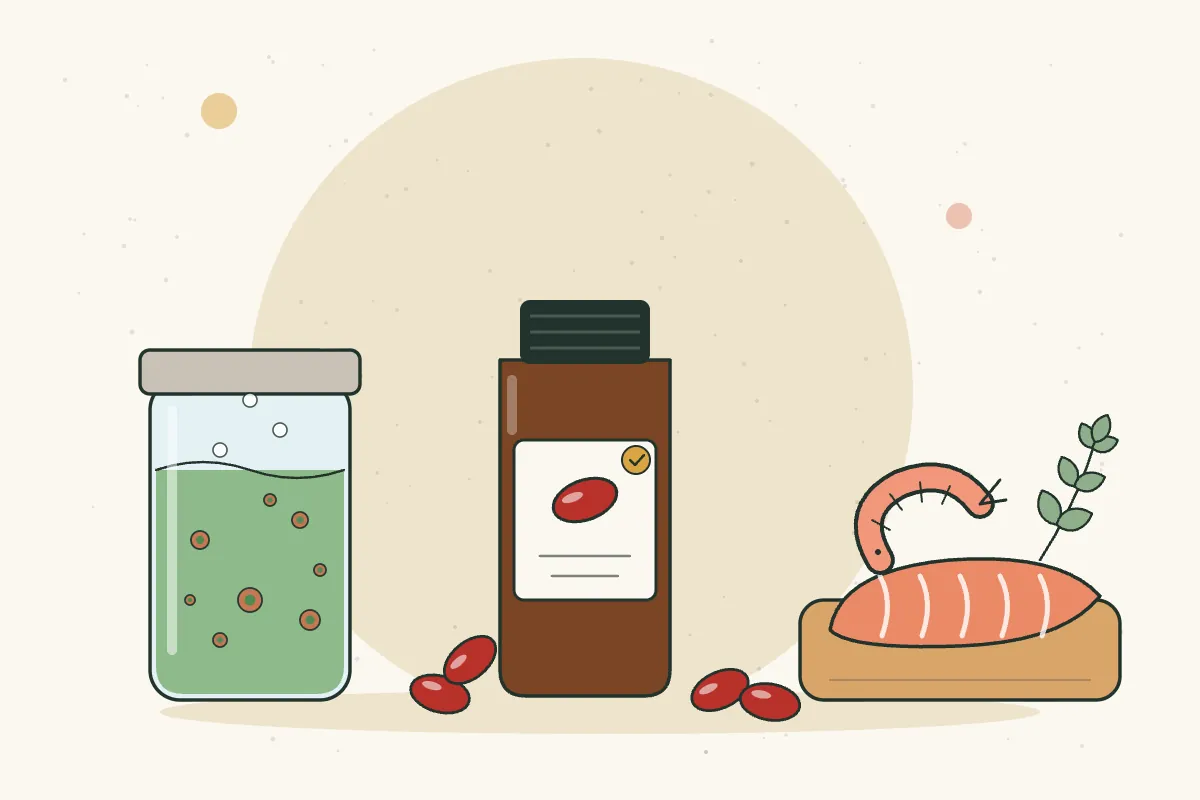
There is no single "best" astaxanthin supplement, but there are clear signs of a well-made one: a stated source (usually the microalga Haematococcus pluvialis), a clear dose in milligrams, an oil-based softgel, and a seal from an independent tester such as USP or NSF. Astaxanthin is a red carotenoid with antioxidant activity. Small studies hint at benefits for skin, tired eyes and exercise recovery, but the evidence is early, and no supplement replaces a varied diet.
The short version
- Astaxanthin is the pigment that makes salmon, shrimp and flamingos pink. Supplements usually come from algae.
- Research is mostly small, short trials. Results for skin, eye fatigue and exercise are promising but not conclusive.
- On the label, look for the source, the astaxanthin dose per serving (studies often use 4 to 12 mg), and third-party testing.
- It is generally well tolerated. European food safety authorities consider up to 8 mg a day from supplements safe for adults.
- Ask your doctor first if you are pregnant, breastfeeding, take medicines or have a chronic condition.
What astaxanthin is
Astaxanthin belongs to the carotenoid family, the same group as beta carotene and lutein. It is made by certain microalgae, yeasts and bacteria. Tiny crustaceans eat the algae, and salmon, trout, shrimp and lobster accumulate the pigment, which gives their flesh and shells a pink or red color. Flamingos get their famous color in the same way.
Unlike beta carotene, your body does not turn astaxanthin into vitamin A. Its structure lets it sit across cell membranes, which is one reason researchers are interested in its antioxidant effects in the lab. Antioxidant activity in a test tube, however, does not automatically translate into health benefits in people.
Natural and synthetic sources
Most supplements for people use astaxanthin from the freshwater alga Haematococcus pluvialis, grown in tanks or tubes. Some use the yeast Phaffia rhodozyma. Synthetic astaxanthin, made from petrochemical starting materials, is mainly used in fish feed for farmed salmon. Natural algal astaxanthin occurs mostly in an esterified form bound to fatty acids, while synthetic astaxanthin is a different mix of molecular forms. The two are not identical, and most human studies used algae-derived products.
What the research says
Astaxanthin has been studied for many uses, mostly in small trials of a few dozen people lasting weeks to a few months. Some were funded by manufacturers. Here is where things stand:
- Skin: several small trials found modest improvements in skin moisture, elasticity or fine wrinkles after 8 to 16 weeks, sometimes combined with a topical product. Sunscreen still does far more for skin aging. See also our guide to home remedies for wrinkles.
- Eye fatigue: studies, many from Japan, reported less eye strain in people doing screen work. The trials were small and results varied.
- Exercise: research on endurance, muscle soreness and recovery is mixed. Some trials found small benefits, others none.
- Heart and metabolism: small studies looked at blood lipids, blood sugar and markers of oxidative stress, with inconsistent results. There is no evidence that astaxanthin prevents heart disease.
- Brain and other uses: claims about memory, fertility, immunity and inflammation rest mostly on lab, animal or very early human studies.
Bottom line: astaxanthin is a reasonable thing to be curious about, but it is not proven to prevent or treat any disease. Eating salmon, trout or shrimp a couple of times a week gives you some astaxanthin along with protein and omega-3 fats.
What to look for on the label
Dietary supplements in the US do not need approval for safety or effectiveness before they are sold, and quality checks are largely up to the manufacturer. That makes the label and independent testing especially important.
- The source. Look for "Haematococcus pluvialis" or "algae" (or a named yeast) on the ingredient list. If the label only says "astaxanthin" with no source, you do not know what you are getting.
- The actual dose. Check the milligrams of astaxanthin per serving, not just the milligrams of algae extract or oil. Many products provide 4 to 12 mg, the range most often used in studies. More is not necessarily better.
- The form. Astaxanthin is fat-soluble, so it is usually sold in softgels with an oil such as olive, safflower or sunflower oil. Take it with a meal that contains some fat.
- Third-party testing. Seals from USP (United States Pharmacopeia), NSF or similar independent programs mean the product was tested for identity, content and contaminants. These seals do not prove the supplement works, but they help ensure you get what the label promises.
- Other ingredients. Check for allergens (some softgels use fish gelatin, some blends add krill oil, which is a shellfish product), unnecessary extras and proprietary blends that hide the actual amounts.
- Freshness and storage. Carotenoids break down with heat, light and air. Look for an expiration date, opaque packaging, and store the bottle in a cool, dark place.
- Modest claims. Be wary of labels or ads promising to cure, prevent or reverse disease, or to be "500 times stronger than vitamin C." Lab comparisons like that say little about effects in your body.
Food first
A 3 ounce (85 g) serving of wild sockeye salmon naturally contains astaxanthin, along with omega-3 fats and protein. Farmed salmon also contains it from its feed, usually in smaller amounts.
Safety and side effects
In studies, astaxanthin at common doses has been well tolerated. Reported side effects are uncommon and mild, such as stomach discomfort or reddish-colored stools. Very high intakes over long periods may slightly tint the skin. Long-term safety data beyond a few months is limited.
Safety first
- Pregnancy and breastfeeding: there is not enough safety data. Avoid supplements unless your doctor recommends them.
- Children: safety has not been established for children. Do not give them astaxanthin supplements without medical advice.
- Medicines: astaxanthin may have mild effects on blood pressure and blood clotting in some studies, and it could interact with liver enzymes. Check with a doctor or pharmacist if you take blood thinners, blood pressure medicine, hormone therapy or other regular medication.
- Allergies: if you are allergic to shellfish or algae, check the source and other ingredients carefully.
- Surgery: tell your surgeon about all supplements you take.
Frequently asked questions
How much astaxanthin should I take?
There is no official recommended intake. Most studies used 4 to 12 mg a day. European food safety experts concluded that up to 8 mg a day from supplements is safe for adults. Ask your doctor what makes sense for you.
Is natural astaxanthin better than synthetic?
Most human research used algae-derived astaxanthin, so there is more data on it. Synthetic astaxanthin is chemically different in its mix of forms and is mainly used in animal feed. For supplements, a clearly labeled algal source is the more studied choice.
How long does it take to notice anything?
Studies on skin and eyes typically ran for 8 to 12 weeks or longer. If you notice no difference after about three months, the supplement is likely not worth the money for you.
Sources
- European Food Safety Authority, NDA Panel: Safety of astaxanthin for its use as a novel food in food supplements (2020)
- NIH Office of Dietary Supplements: Dietary supplements, what you need to know
- US Food and Drug Administration: Information for consumers on using dietary supplements
- United States Pharmacopeia: USP Verified dietary supplements program
- Marine Drugs: review of astaxanthin sources, structure and human health studies
Comments
No comments yet. Tried this at home? Tell us how it went.