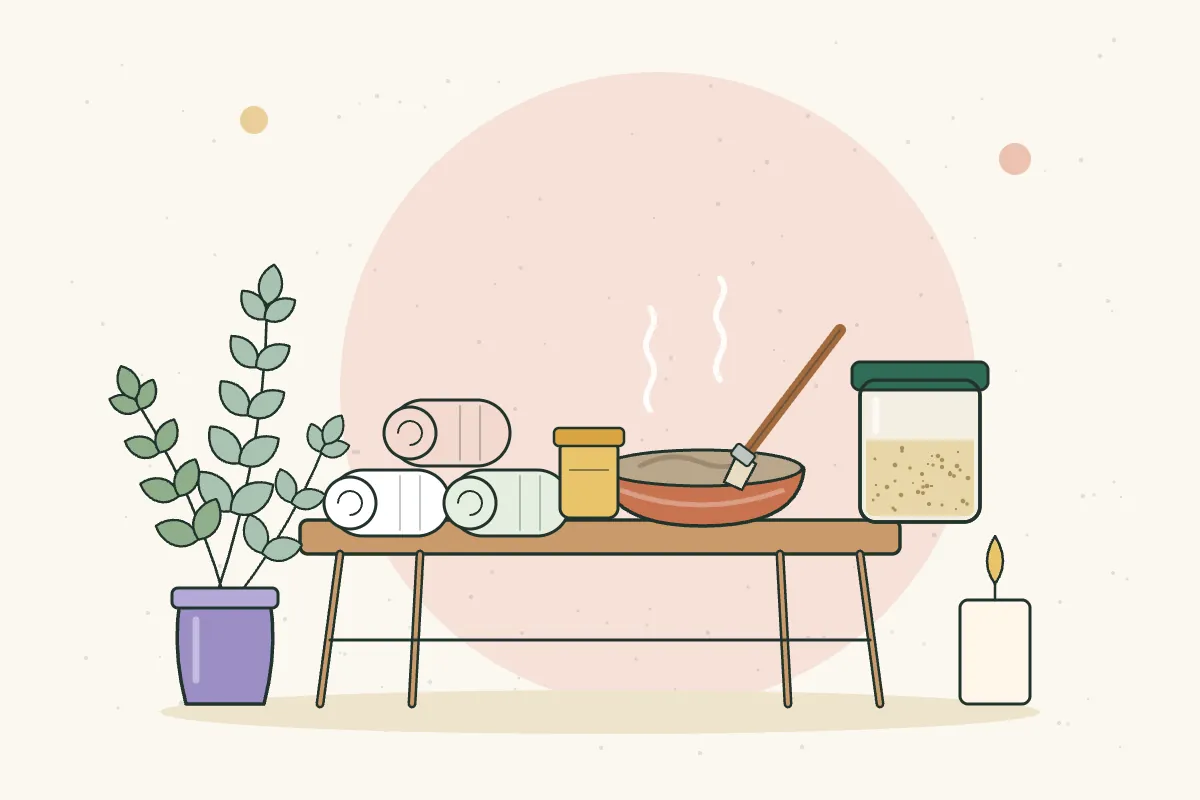
A homemade body wrap is a paste of clay, oats, honey or oil spread on the skin and covered with warm towels or a cotton sheet for 20 to 30 minutes. It can leave skin softer and make for a genuinely relaxing evening. What it cannot do is burn fat, remove cellulite or pull toxins out of your body. Any inches you lose are water, and they return as soon as you drink and eat normally.
The short version
- Wraps soften and moisturize skin. That is the real, modest benefit.
- Measured inch loss comes from temporary water loss and compression, not from fat loss.
- Your liver and kidneys handle detoxification. A wrap does not help them.
- Skip tight plastic wrap and heat if you are pregnant, have heart or circulation problems, diabetes, or broken skin.
What a body wrap actually does
Spa menus promise slimming, toning and detox. The honest picture is simpler. When you wrap skin in warm, snug layers, you sweat, and the outer skin swells slightly with moisture from the mask. Compression pushes a little fluid out of the tissue for a short time. Someone measuring your waist right afterward may find a difference of a fraction of an inch. Within hours of drinking water and eating, it is gone.
There is no good scientific evidence that clay, seaweed, coffee or any other wrap ingredient breaks down fat cells or reduces cellulite in a lasting way. The National Center for Complementary and Integrative Health notes that there is little reliable research supporting detox programs in general, and some products sold for detox have caused harm. Your body already clears waste through the liver, kidneys, gut and lungs. Sweat is mostly water and salt.
So why bother? Because a warm, quiet half hour with a soft, moisturizing mask feels good. Clay can absorb oil and leave skin feeling smooth, honey and oats are soothing, and the ritual itself is a nice way to slow down. Go in with that expectation and you will not be disappointed.
What you need
- A base: about 1 cup (roughly 120 g) of cosmetic clay such as kaolin or bentonite, or 1 cup of finely ground oats.
- Something to mix: warm water, brewed and cooled green or chamomile tea, or plain yogurt.
- Something soothing: 2 tablespoons of honey and 2 tablespoons of a plant oil like olive, sunflower or jojoba.
- Coverings: two or three large cotton towels or an old cotton sheet, warmed in the dryer. A bathrobe and a blanket on top.
- Old towels underneath, because clay and oil stain.
Use a glass or ceramic bowl and a wooden or plastic spoon. Many people avoid metal with bentonite clay out of habit; it does no harm either way, but non-metal tools are easier to clean.
How to make a relaxing body wrap
- Do a patch test the day before. Dab a little of the finished paste on your inner forearm and leave it for 20 minutes. Rinse and wait 24 hours. Redness, itching or bumps mean this mix is not for you.
- Shower first. Warm water and a gentle wash open the evening and remove lotion or sunscreen. Pat skin dry, leaving it slightly damp.
- Mix the paste. Stir the liquid slowly into the clay or oats until it is as thick as yogurt, then add honey and oil. Make it fresh; do not store leftovers.
- Apply a thin layer. Spread it on arms, legs, hips or back with your hands or a soft brush. Keep it away from the face, genitals, any cuts, rashes or freshly shaved skin.
- Wrap loosely. Lay the warm towels or sheet over the paste and settle under a blanket. Snug is fine; tight is not. You should be able to breathe deeply and move your fingers and toes easily.
- Rest for 20 to 30 minutes. Keep a glass of water within reach. If you feel dizzy, hot, itchy or uncomfortable, unwrap right away.
- Rinse and moisturize. Remove the towels, rinse in a lukewarm shower and finish with a plain moisturizer. Clean the shower drain afterward, since clay can build up in pipes.
Three gentle variations
Oat and honey for dry or sensitive skin: oats, warm water, honey, a spoon of oil. Clay and green tea for oily skin on the back and shoulders. Yogurt and olive oil for a quick, cool wrap in summer, followed by a thorough rinse.
What to leave out
Recipes online often add ingredients that make a wrap riskier without making it better.
- Plastic cling film wrapped tightly. It traps heat, restricts circulation and can make you overheat. Loose cotton is safer and feels nicer.
- Cayenne, ginger or mustard "heating" pastes. The tingling is skin irritation, not fat burning, and they can cause painful redness or burns.
- Undiluted essential oils. A large skin area covered for half an hour absorbs more than you think. If you want a scent, one or two drops of lavender in a full batch is plenty, or simply use chamomile tea as the liquid. Learn more in our guide to what lavender oil is good for.
- Coffee grounds left on for long. They are fine as a quick scrub (see our coffee scrub guide) but stain towels and grout and add nothing in a wrap.
- Saunas, hot baths or exercise while wrapped. That combination is the main route to dehydration and fainting.
Safety first
- Skip heated or tight wraps if you are pregnant, have heart disease, high or low blood pressure, varicose veins, a history of blood clots, diabetes with reduced feeling in the feet, or kidney disease. Ask your doctor first.
- Stop at once if you feel lightheaded, nauseous, overheated, short of breath or your heart races. Unwrap, sit up slowly and drink water.
- Do not wrap over broken, sunburned or inflamed skin, eczema flares or a new tattoo.
- Children should not be wrapped.
If your real goal is a slimmer look
It is fine to enjoy a wrap and still want visible change. What actually shifts body shape over weeks is unglamorous: regular movement you enjoy, enough protein and fiber, decent sleep and fewer liquid calories. Cellulite is mostly about skin structure and genetics, and even medical treatments improve it only partly. Gentle massage may help you feel less puffy for a while; our guide to self lymphatic massage explains what it can and cannot do. A wrap fits into that picture as self care, not as a shortcut.
Frequently asked questions
How much weight do you lose with a body wrap?
Only water. Any change on the scale or tape measure is temporary and disappears once you rehydrate, usually within a day.
How often can I do a homemade body wrap?
Once a week is plenty for most skin. Clay can be drying, so moisturize afterward and space wraps further apart if your skin feels tight or itchy.
Does a body wrap help cellulite?
Skin may look smoother for a few hours because it is hydrated and slightly swollen. There is no good evidence that a wrap reduces cellulite over time.
Sources
- National Center for Complementary and Integrative Health: "Detoxes" and "Cleanses": What You Need To Know
- American Academy of Dermatology: Cellulite treatments, what really works
- US Food and Drug Administration: Cosmetics safety Q and A, skin reactions and patch testing
- Mayo Clinic: Dehydration, symptoms and causes
Comments
No comments yet. Tried this at home? Tell us how it went.