
Self lymphatic massage is a very light, slow skin-stretching technique meant to help lymph fluid move toward the lymph nodes. It comes from manual lymphatic drainage, a therapy used for lymphedema (chronic swelling after lymph nodes have been damaged or removed). For that condition it is part of standard care, ideally learned from a certified therapist. For everyone else it can be a relaxing routine, but claims that it detoxes the body, melts fat or boosts immunity are not backed by good evidence.
The short version
- Lymphatic massage uses very gentle pressure, just enough to stretch the skin, never deep kneading.
- The evidence is mainly for lymphedema, as part of a program with compression and exercise under professional guidance.
- Always start near the collarbones and armpits, then work outward, stroking toward those areas.
- Do not do it with an infection, a known or suspected blood clot, heart failure, kidney failure or active cancer without your doctor's approval.
- Sudden swelling in one leg or arm, or swelling with shortness of breath, needs medical care, not massage.
What the lymphatic system does
Your lymphatic system is a network of thin vessels and small bean-shaped lymph nodes. It collects excess fluid from the tissues, filters it through the nodes, where immune cells do their work, and returns it to the bloodstream near the collarbones. Unlike blood, lymph has no central pump. It moves thanks to tiny contractions of the vessel walls, the squeeze of your muscles when you move, and the pressure changes of deep breathing.
When lymph vessels or nodes are damaged, for example by surgery, radiation, infection or an inherited condition, fluid can build up and cause lasting swelling called lymphedema. That is the situation manual lymphatic drainage was developed for.
What the evidence says
Manual lymphatic drainage (MLD) was developed in Europe in the 1930s. Today certified lymphedema therapists use it as one part of complete decongestive therapy, together with compression bandages or garments, exercise and careful skin care.
- For lymphedema: MLD is an accepted part of treatment, and therapists teach patients a simplified version to do at home. Systematic reviews, including a Cochrane review on lymphedema after breast cancer treatment, found that the extra benefit of MLD on top of compression is modest and the studies are small. Compression and exercise do much of the heavy lifting.
- For healthy people: there is little research. Claims that lymphatic massage removes toxins, causes weight loss, smooths cellulite, sculpts the face or prevents illness are not supported by good evidence. Your lymphatic system does its job without help when it is healthy.
- What people do report: many find the slow, rhythmic touch relaxing, and some feel less puffy, for example after a long flight or a day on their feet. That is plausible but not well studied.
If you have had lymph nodes removed or radiated, or you have ongoing swelling, ask your doctor for a referral to a certified lymphedema therapist (often listed with the initials CLT). They can teach you a routine tailored to your body, which matters, because the right direction of strokes depends on which nodes still work.
A gentle self lymphatic massage routine
This general routine is for healthy people who want a relaxing, gentle practice. It takes about 10 minutes. Sit or lie comfortably, with skin bare or covered by a thin layer of clothing. No oil is needed; it makes the skin slide instead of stretch.
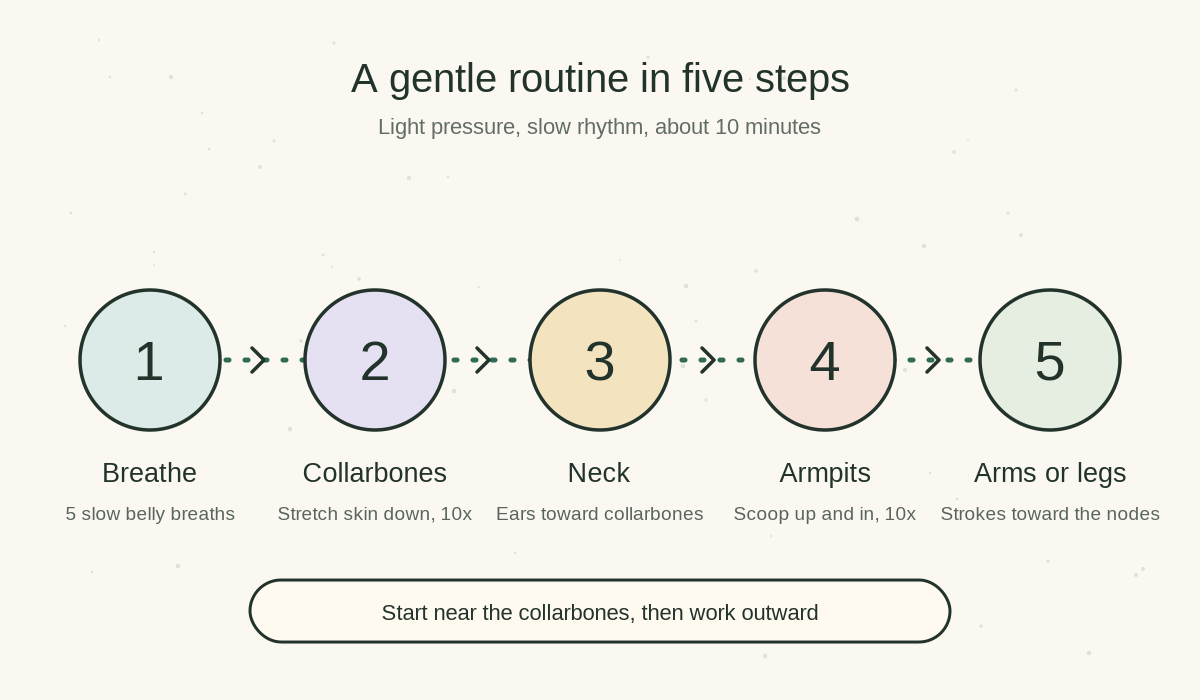
- Breathe deeply. Place your hands on your belly and take 5 slow breaths, letting the belly rise as you inhale. Deep breathing helps move lymph in the large vessels of the chest.
- Above the collarbones. Rest your fingertips flat in the hollows just above your collarbones. Gently stretch the skin down and slightly inward, then release. Repeat 10 times.
- Sides of the neck. Place your flat hands on both sides of your neck, just below the ears. Slowly stretch the skin downward toward the collarbones and release. Repeat 10 times.
- Armpits. Cup one hand into the opposite armpit and make gentle scooping motions upward and inward, 10 times. Switch sides.
- Arms. Starting at the upper arm, stretch the skin toward the armpit in slow strokes. Then do the same from the elbow up, and finally from the forearm toward the elbow. Always work from the part closest to the armpit outward, with every stroke pointing toward it.
- Legs, if you like. Lie down. Place your flat hand on the crease where the thigh meets the body and stretch the skin gently upward, 10 times. Then stroke the thigh toward the groin, the back of the knee upward, and finally the lower leg toward the knee.
How light is light?
Use about as much pressure as you would to stroke a sleeping cat. You are moving the skin, not the muscle underneath. If the skin turns red or it feels like a regular massage, you are pressing too hard. Slow and rhythmic beats fast and firm.
Other ways to keep lymph moving
Massage is not the main driver of lymph flow. Everyday movement is.
- Walk and move regularly. Working calf and arm muscles push lymph along. Even short activity breaks count, as our article on how a little exercise goes a long way shows.
- Break up long sitting. On long drives, flights or desk days, get up every hour or do simple exercises at your desk, like ankle circles and calf raises.
- Elevate swollen legs above heart level for a while at the end of the day.
- Ask about compression. Compression stockings can help with leg swelling and on long flights, but get advice first if you have circulation problems or diabetes.
Safety first
- Do not do lymphatic massage if you have an active infection (such as cellulitis), fever, a known or suspected blood clot, congestive heart failure, kidney failure, or skin wounds or a rash in the area.
- Ask your doctor first if you have or have had cancer, are pregnant, have liver disease, thyroid problems or low blood pressure, or take medication for heart or kidney conditions. Moving fluid around can strain an already overloaded system.
- Call 911 for swelling with chest pain, shortness of breath or coughing up blood. These can be signs of a blood clot in the lung or heart failure.
- See a doctor promptly for sudden swelling in one arm or leg, especially with pain, warmth or redness; swelling in both legs that leaves a dent when pressed; or a lymph node that is hard, fixed in place, growing, or lasts more than two weeks, particularly with fever, night sweats or weight loss.
Frequently asked questions
How often should I do self lymphatic massage?
For relaxation, a few times a week or daily is fine if it feels good. With lymphedema, follow the schedule your therapist gives you, since it is combined with compression and exercise.
Does lymphatic drainage help with weight loss or detox?
No. It may temporarily reduce mild puffiness, but it does not burn fat or remove toxins. The liver, kidneys and lymphatic system handle waste on their own.
Can lymphatic massage help a puffy face in the morning?
Gentle strokes from the face down toward the neck may reduce mild morning puffiness for a while, much like a cool compress. Persistent facial swelling should be checked by a doctor.
Sources
- Cleveland Clinic: Lymphatic drainage massage
- National Cancer Institute: Lymphedema (PDQ), patient version
- Cochrane Database of Systematic Reviews: Manual lymphatic drainage for lymphedema following breast cancer treatment
- Mayo Clinic: Lymphedema, diagnosis and treatment
- American Cancer Society: Lymphedema, treatment and management
Comments
No comments yet. Tried this at home? Tell us how it went.