The easiest way to clean pots and pans is to match the method to the material and to start while the pan is still warm. Stainless steel can take a baking soda scrub and some elbow grease, cast iron wants a quick rinse, a dry pan and a little oil, while nonstick and enameled cookware need gentle tools to protect their surfaces. Most burnt-on messes come off with heat and soaking, so you rarely need harsh scrubbing.
The short version
- Deglaze or soak right after cooking. Fresh residue is far easier than dried residue.
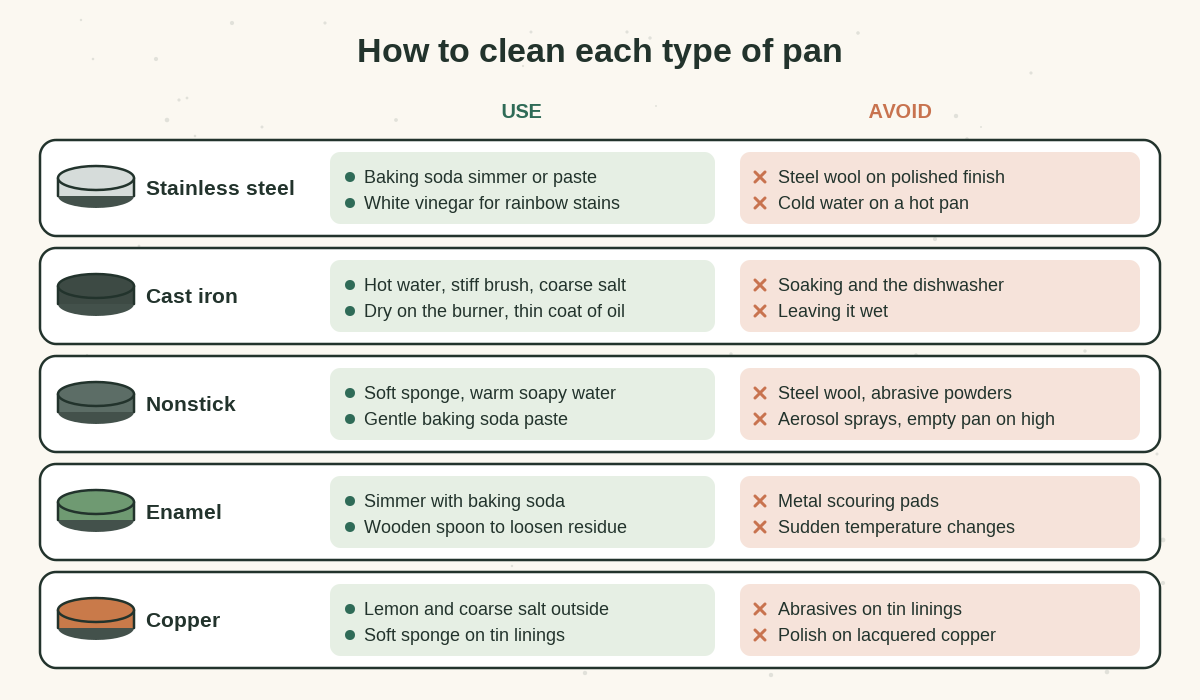
- Stainless steel: baking soda paste or a simmer with baking soda; vinegar for rainbow stains.
- Cast iron: hot water and a brush, dry on the stove, a thin coat of oil. No long soaks.
- Nonstick and enamel: soft sponges, no steel wool, avoid sudden temperature changes.
- Copper: lemon and salt for the outside, gentle care for tin linings.
Three rules for every pan
- Deglaze while it is warm. After cooking, pour a splash of hot water into the warm (not smoking hot) pan and loosen the browned bits with a wooden spatula. Most residue lifts in seconds.
- Let it cool before cold water. Plunging a hot pan into cold water can warp thin metal and crack enamel. Let it cool down for a few minutes or use hot water.
- Soak with purpose. A 15 to 30 minute soak in hot water with dish soap softens most messes on stainless, nonstick and enamel. Cast iron is the exception.
Stainless steel
Stainless steel is the most forgiving. For everyday cleaning, hot soapy water and a non-scratch scrub pad are enough.
For burnt food: cover the bottom with water, add 1 to 2 tablespoons of baking soda and bring it to a simmer for about 10 minutes. Let it cool a little, then scrape with a wooden spatula. For what remains, sprinkle on dry baking soda and scrub with a damp sponge.
For rainbow discoloration or white spots: these come from heat and minerals in the water. Wipe the pan with white vinegar, rinse and dry. A powdered cleanser with oxalic acid, sold for stainless steel and cookware, works well on stubborn marks; wear gloves and rinse thoroughly.
Steel wool can leave scratches on polished stainless, so save it for the worst cases.
Cast iron
Cast iron relies on its seasoning, a layer of baked-on oil that makes it more nonstick and protects it from rust. Your goal is to remove food without stripping that layer.
- Clean while warm. Rinse with hot water and scrub with a stiff brush or a plastic scraper. A small amount of mild dish soap is fine on well-seasoned pans.
- Use salt for stuck bits. Pour in a tablespoon of coarse salt with a little oil and scrub with a folded paper towel. The salt acts as a gentle abrasive.
- Dry completely. Towel it off, then put it on a burner over low heat for a minute or two until every trace of water has evaporated.
- Oil lightly. While still warm, rub in a very thin layer of cooking oil with a paper towel and wipe off the excess. It should look dry, not greasy.
Rust spots? Scrub the rust off with steel wool, wash, dry well, coat the whole pan thinly with oil and bake it upside down in the oven at around 450°F (230°C) for an hour, with foil on the rack below to catch drips. Let it cool in the oven. Never put cast iron in the dishwasher or leave it soaking.
Nonstick
Nonstick coatings are easy to clean and easy to damage. Treat them gently and they last much longer.
- Let the pan cool, then wash with warm soapy water and a soft sponge. Most food slides right off.
- For a sticky film, make a paste of baking soda and water, rub it on gently with a soft cloth, and rinse.
- Skip aerosol cooking sprays. They can leave a gummy residue that builds up on the coating. Use a little oil or butter instead.
- Use wooden, silicone or nylon utensils, and avoid steel wool, abrasive powders and the dishwasher unless the manufacturer says it is safe.
Once the coating is deeply scratched, peeling or flaking, it is time to replace the pan.
Enameled cast iron and enamel pots
Dutch ovens and enamel stockpots have a glassy coating over the metal. It does not need seasoning, but it can chip and crack.
For stuck-on food, fill the pot with water, add 2 tablespoons of baking soda and simmer for 10 to 15 minutes. Loosen the residue with a wooden spoon. Light staining on a pale interior is normal and harmless. For more stubborn stains, a soft paste of baking soda and a little water left on for a few hours helps. Avoid metal scouring pads and sudden temperature changes, such as cold water in a hot pot.
Copper
Copper cookware is usually lined inside with stainless steel or tin. Clean the interior according to its lining: stainless like stainless above, tin very gently with a soft sponge and no abrasives.
For tarnish on the outside, dip half a lemon in coarse salt and rub it over the copper, or make a paste of equal parts white vinegar, salt and flour. Rinse well and dry right away, because water spots form quickly. Decorative copper with a clear lacquer finish should only be wiped with a damp cloth.
Safety first
- Nonstick and heat: do not heat an empty nonstick pan on high. Overheated coatings can release fumes that cause flu-like symptoms in people and are very dangerous for pet birds. Keep birds out of the kitchen when cooking at high heat.
- Oven re-seasoning: ventilate the kitchen; oil smoking at high oven temperatures can set off smoke alarms.
- Cleansers: wear gloves with oxalic acid powders and never mix them with bleach.
- Scratched tin linings: if the tin lining of a copper pot is worn through to the copper, have it re-tinned before cooking acidic foods in it.
The dryer sheet trick?
You may read that a dryer sheet soaking in a pan loosens burnt food. Plain hot water and baking soda do the same job without adding fragrance chemicals to a cooking surface. For more low-effort tips around the kitchen, see our 10 home cleaning hacks.
Frequently asked questions
Can I put my pots and pans in the dishwasher?
Stainless steel usually handles it, though handwashing keeps it shinier. Cast iron never goes in, and most nonstick, copper and aluminum pans last longer when washed by hand. Check the manufacturer's care instructions.
How do I clean the outside bottom of a pan?
For stainless and enamel exteriors, a baking soda paste left on for 20 minutes and then scrubbed works well. For heavy brown buildup on stainless, an oxalic acid cleanser is often the most effective option.
Is it really okay to use soap on cast iron?
Yes, a little mild dish soap will not remove good seasoning. What damages cast iron is soaking, the dishwasher and leaving it wet.
Sources
- US Food and Drug Administration: Authorized uses of PFAS in food contact applications
- American Cleaning Institute: Cleaning cookware and kitchen surfaces
- Merck Veterinary Manual: Toxicoses in pet birds, polytetrafluoroethylene
Comments
No comments yet. Tried this at home? Tell us how it went.