No single food melts away stress or cures anxiety, and "superfood" is a marketing word, not a scientific one. What research does support is an overall eating pattern: plenty of vegetables, fruit, beans, whole grains, nuts and fish, with less ultra-processed food, alcohol and excess caffeine. Within that pattern, some foods stand out because they supply nutrients linked to mood, sleep and a healthy gut.
The short version
- Whole eating patterns such as the Mediterranean diet are linked to lower rates of depression and better mood. Evidence for single foods is weaker.
- Useful staples: fatty fish, leafy greens, beans and lentils, nuts and seeds, whole grains, berries, yogurt and other fermented foods.
- Regular meals keep blood sugar steady, which can make you feel less shaky and irritable.
- Cutting back on alcohol and late-day caffeine often helps anxiety and sleep more than adding any "superfood."
- Food supports mental health. It does not replace therapy or medication for an anxiety disorder or depression.
Why "superfood" is the wrong question
The word "superfood" has no legal or scientific definition. It is used to sell everything from acai powder to green juice. Nutrition research on mental health points away from miracle ingredients and toward the overall quality of what you eat day after day.
Large observational studies have repeatedly linked diets rich in plants, fish and olive oil with a lower risk of depression, and diets high in sugary drinks and heavily processed foods with a higher risk. In a well-known 2017 randomized trial, adults with moderate to severe depression who received coaching to improve their diet toward a Mediterranean style improved more than those who received social support alone. The trial was small, and diet was added to their usual care rather than replacing it, but it shows that food can be one meaningful part of the picture.
For anxiety specifically, the evidence is thinner. Still, the same healthy pattern supports steady energy, good sleep and gut health, all of which affect how stress feels.
Foods worth putting on your plate
Fatty fish
Salmon, sardines, mackerel, herring and trout provide omega-3 fatty acids (EPA and DHA), which are part of brain cell membranes. Some studies link higher fish intake with lower rates of depression, and omega-3 supplements have shown small benefits for depressive symptoms in some trials. Aim for two servings of fish a week, choosing lower-mercury options.
Leafy greens
Spinach, kale, Swiss chard and romaine supply folate and magnesium. Low folate levels have been linked with depression, and magnesium plays a role in the nervous system. Greens are easy to add to eggs, soups, pasta and smoothies; our green smoothie week plan has ideas.
Beans, lentils and chickpeas
Legumes combine fiber, plant protein, folate and magnesium. Their slow-digesting carbohydrates help keep blood sugar steady between meals. A bowl of lentil soup or a chickpea salad is one of the cheapest ways to eat well.
Nuts and seeds
Almonds, walnuts, cashews, pumpkin seeds and chia seeds are good sources of magnesium, healthy fats and fiber. Walnuts and chia also contain a plant omega-3. A small handful, about 1 ounce (28 g), is a satisfying snack that keeps you going for longer than chips or candy.
Whole grains
Oats, brown rice, quinoa, barley and whole wheat bread provide fiber and B vitamins. Complex carbohydrates may also help the brain make serotonin, though food effects here are modest. A warm bowl of oatmeal in the morning is a simple start.
Berries and colorful produce
Blueberries, strawberries, oranges, bell peppers and other colorful fruits and vegetables are rich in vitamin C and plant compounds called polyphenols. Studies that track people over years find that higher fruit and vegetable intake goes along with better mood and wellbeing. Frozen berries count just as much as fresh ones.
Yogurt, kefir and other fermented foods
The gut and the brain communicate constantly, and researchers are studying how gut bacteria may influence mood and stress. Early human studies on fermented foods and probiotics show mixed but interesting results. Plain yogurt, kefir, sauerkraut and kimchi are healthy additions regardless. Choose unsweetened versions where you can.
Dark chocolate and green tea, in moderation
A square or two of dark chocolate is a pleasant treat that contains polyphenols, but it is still a sweet and should stay small. Green tea contains L-theanine, an amino acid that may promote calm alertness, along with some caffeine. Chamomile tea is caffeine-free, and a few small trials of chamomile extract found it eased symptoms of generalized anxiety. A warm cup can be a calming evening ritual.
An easy calm-day menu
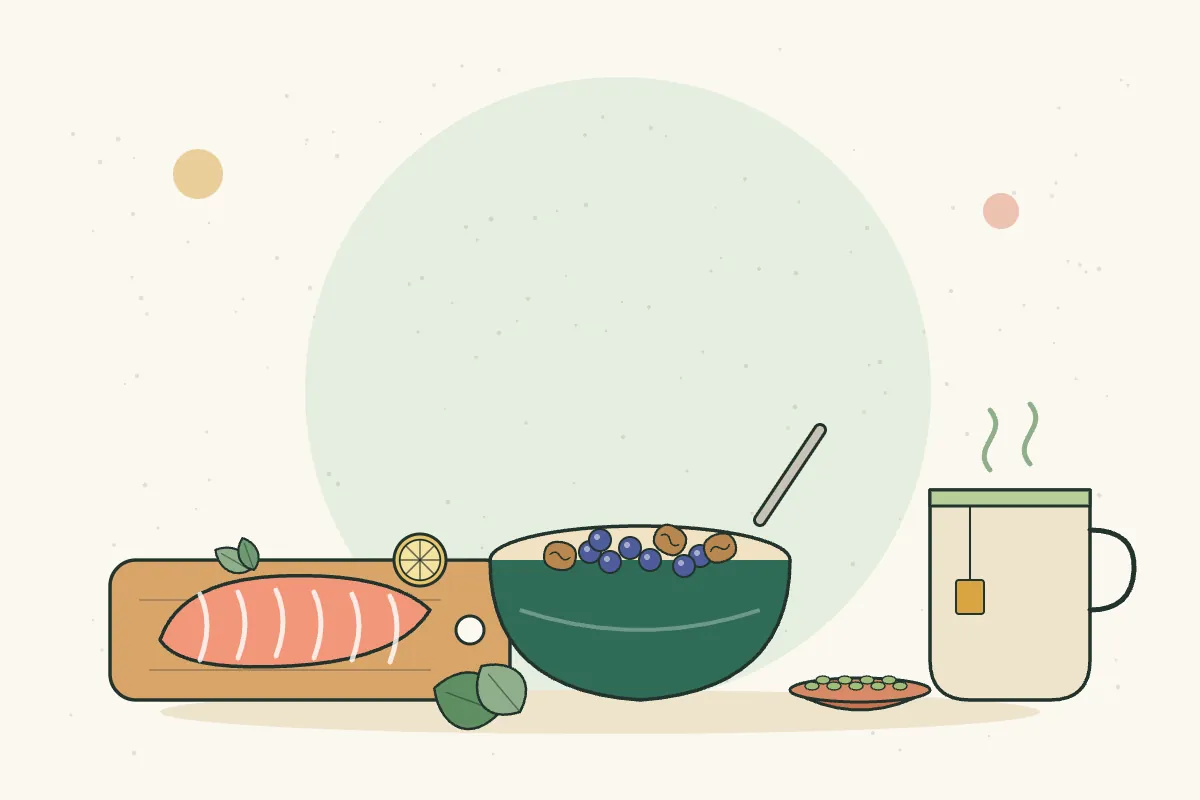
Breakfast: oatmeal with walnuts and blueberries. Lunch: lentil and spinach soup with whole grain bread. Snack: plain yogurt with a few pumpkin seeds. Dinner: baked salmon, brown rice and roasted vegetables with olive oil. Evening: a cup of chamomile tea.
What to cut back on
- Caffeine: too much coffee, energy drinks or strong tea can cause jitteriness, a racing heart and poor sleep, and can trigger panic in sensitive people. Keep intake moderate and stop by early afternoon.
- Alcohol: a drink may feel relaxing at first, but alcohol disrupts sleep and often worsens anxiety the next day. Anxiety that feels better only with alcohol is a sign to talk to a doctor.
- Skipped meals and sugary snacks: long gaps followed by sweets can lead to blood sugar swings that feel like shakiness, irritability and worry. Regular meals with protein and fiber help.
- Heavily processed foods: diets high in ultra-processed foods are associated with poorer mental health in observational studies. You do not need to be perfect; shift the balance gradually.
Safety first
- Talk to your doctor before taking omega-3, magnesium, St. John's wort or other supplements for mood. Some interact with antidepressants, blood thinners and other medicines.
- Do not stop prescribed medication because you have changed your diet.
- If you have thoughts of harming yourself, call or text 988 in the US, or call 911 in an emergency.
When food is not enough
Eating well can make stress more manageable, but it is not a treatment for an anxiety disorder or depression. See a doctor or mental health professional if worry or low mood lasts more than two weeks, interferes with work, school or relationships, or comes with panic attacks, changes in appetite or sleep, or loss of interest in things you used to enjoy. Restrictive eating driven by anxiety about food is also worth discussing with a professional. For more non-food strategies, see our guide on what aromatherapy can and can't do for anxiety.
Frequently asked questions
What is the best food for anxiety?
There is no single best food. An overall pattern built on vegetables, fruit, legumes, whole grains, nuts, fish and olive oil has the most support. Regular meals and less caffeine and alcohol matter as much as any one ingredient.
Do magnesium-rich foods help with stress?
Magnesium supports normal nerve and muscle function, and many Americans get less than recommended. Getting enough from greens, nuts, seeds, beans and whole grains is sensible. Evidence that extra magnesium relieves anxiety is limited.
How quickly can diet changes affect mood?
Some people notice steadier energy within days of eating regular, balanced meals. Studies on diet and depression typically run for several weeks to months, so think of healthy eating as a long-term habit.
Sources
- BMC Medicine: 2017 randomized controlled trial of dietary improvement for adults with major depression
- Harvard T.H. Chan School of Public Health, The Nutrition Source: Diet and mental health, and Omega-3 fatty acids
- NIH National Center for Complementary and Integrative Health: Chamomile, and Probiotics
- NIH Office of Dietary Supplements: Magnesium fact sheet for consumers
- US Food and Drug Administration: Advice about eating fish
Comments
No comments yet. Tried this at home? Tell us how it went.