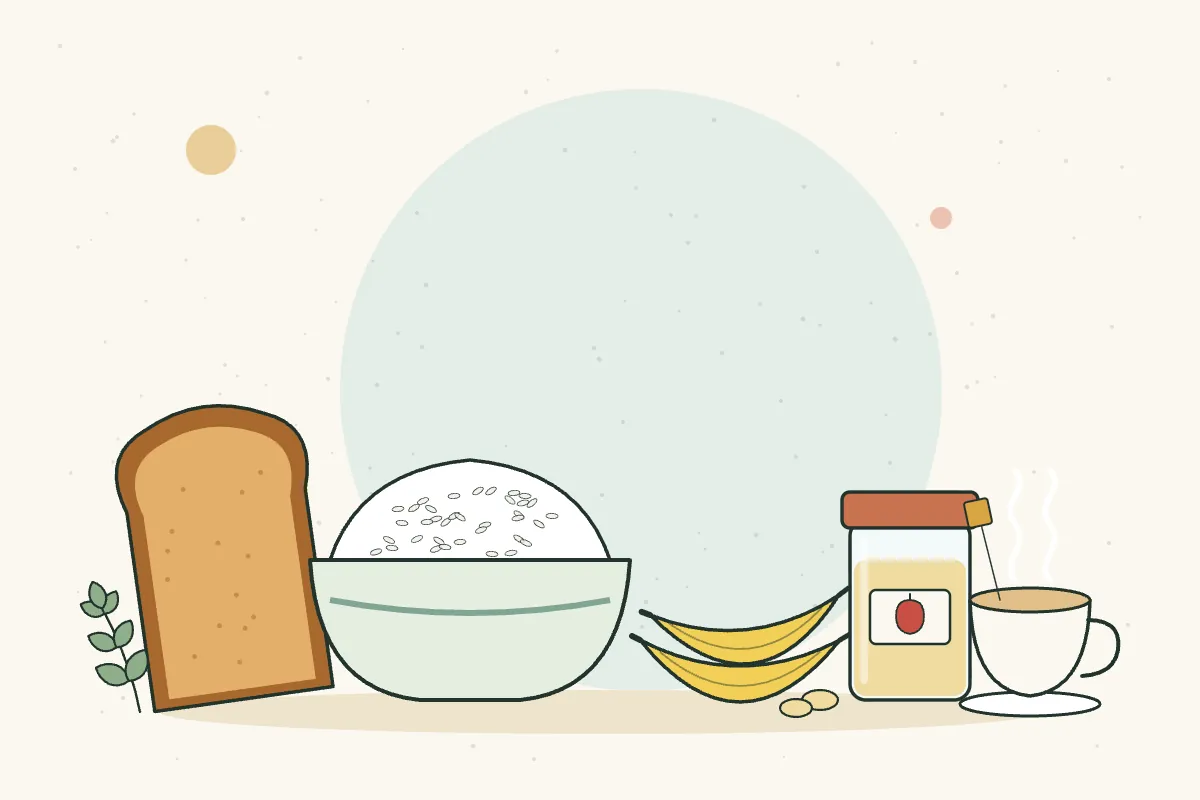
Easy-to-digest foods are simple, low-fat, low-fiber foods that give your stomach and intestines less work to do: think white rice, bananas, eggs, toast, broth and cooked vegetables without skins. They are useful for a few days after a stomach bug, during a flare of reflux or indigestion, after some types of surgery, or when nausea makes most food unappealing. They are not meant as a long-term diet for most people, because fiber is important for gut health once you are well again.
The short version
- Gentle foods are generally low in fat and fiber, mild in seasoning, and cooked until soft.
- They help for short stretches: after vomiting or diarrhea, during heartburn flares, or when recovering from illness.
- Fluids come first when you are sick. Small, frequent sips beat large glasses.
- Bring fiber back gradually once you feel better. A long-term low-fiber diet is not healthier.
- Blood in vomit or stool, severe pain, high fever or signs of dehydration need medical care.
When easy-to-digest foods help
- After a stomach bug. Once vomiting has stopped and you can keep fluids down, bland foods are a gentle way back to eating.
- Diarrhea. Low-fiber starches like rice and bananas can help firm things up, while fatty and very sweet foods often make it worse.
- Nausea from illness, pregnancy or medication. Plain, dry, room-temperature foods are often easier to tolerate than hot, smelly or greasy meals.
- Heartburn and indigestion. Smaller, lower-fat meals empty from the stomach more easily.
- Medical reasons. Doctors sometimes prescribe a low-fiber or low-residue diet before a colonoscopy, after bowel surgery or during flares of inflammatory bowel disease. In those cases, follow the specific instructions you were given.
Easy-to-digest foods by group
Grains and starches
- White rice, plain or cooked in broth
- Oatmeal or cream of wheat made with water (oats contain soluble fiber, which most people tolerate well)
- White toast, plain crackers, saltines, pretzels
- Plain pasta and noodles
- Potatoes and sweet potatoes, peeled, boiled or baked and mashed
Fruits
- Ripe bananas
- Unsweetened applesauce
- Canned peaches or pears in juice
- Melon such as cantaloupe or honeydew (in moderation)
Vegetables
- Well-cooked carrots, green beans, zucchini (peeled) and squash
- Strained vegetable soups and broths
- Peeled, seeded cucumber in small amounts
Protein
- Eggs, scrambled, poached or soft-boiled
- Skinless chicken or turkey breast, baked, poached or shredded into soup
- White fish such as cod or tilapia, baked or steamed
- Tofu, soft or silken
- Smooth peanut butter in small amounts
Dairy (if you tolerate it)
- Plain yogurt or kefir, often easier than milk thanks to the live cultures
- Mild, low-fat cheese such as cottage cheese
- Lactose-free milk
Drinks
- Water, clear broth, weak tea (ginger or chamomile)
- Oral rehydration solutions after vomiting or diarrhea
What about the BRAT diet?
Bananas, rice, applesauce and toast are all easy on the stomach, but eating only these four foods for days is no longer recommended. They lack protein and fat, and current advice for diarrhea is to return to a normal, well-tolerated diet as soon as you feel able. Use them as a starting point and add eggs, chicken, yogurt and cooked vegetables within a day or two.
Foods to limit while your stomach recovers
- Fatty and fried foods: burgers, fries, bacon, creamy sauces, pastries. Fat slows stomach emptying.
- Very spicy food, especially with heartburn.
- High-fiber and gassy foods: beans, lentils, broccoli, cabbage, raw salads, bran cereals, nuts and seeds. These are excellent foods normally, just not during a flare.
- Alcohol, coffee and carbonated drinks, which can irritate the stomach and worsen reflux.
- Sugary drinks and juices, plus sugar alcohols such as sorbitol and xylitol in "sugar free" products, which can worsen diarrhea.
- Large meals. Five or six small meals are easier than three big ones.
Making the transition back
- Start with fluids. After vomiting, wait until you can keep sips of water or an oral rehydration drink down for a few hours.
- Add plain starches. Crackers, toast, rice or a banana in small portions.
- Add gentle protein. Eggs, chicken, yogurt or tofu within a day or so.
- Bring back fiber slowly. Cooked vegetables first, then whole grains, then raw produce and legumes over several days. Our lentil vegetable soup is a good test meal once you are back to normal.
If constipation rather than diarrhea is the problem, the advice is the reverse: more fiber and fluid, not less. Our article on fruits that help with constipation covers that.
Safety first: see a doctor if you notice
- Blood in vomit, vomit that looks like coffee grounds, or black, tarry stools
- Bright red blood in the stool
- Severe or worsening abdominal pain, or pain concentrated in the lower right side
- Fever above 102°F (38.9°C), or any fever with severe diarrhea
- Signs of dehydration: very little or dark urine, dizziness when standing, dry mouth, confusion
- Vomiting that lasts more than 24 hours, or diarrhea lasting more than 2 days in adults
- Trouble swallowing, unintended weight loss, or symptoms that keep returning for weeks
- In babies, young children, older adults, pregnant women and people with weakened immune systems, dehydration happens faster, so call a doctor sooner.
Frequently asked questions
Are cooked vegetables easier to digest than raw?
Generally yes. Cooking softens the fiber and breaks down cell walls, so cooked, peeled vegetables are gentler than raw salads.
Is yogurt good for an upset stomach?
Many people tolerate plain yogurt well, and some probiotic strains may modestly shorten certain types of diarrhea, although evidence varies by strain. Skip it if dairy usually bothers you.
How long should I eat bland foods?
Usually just a few days. Once your symptoms settle, return to your normal diet step by step. If you need to stay on bland foods for longer, talk to a doctor to find out why.
Sources
- MedlinePlus (US National Library of Medicine): Bland diet; Low fiber diet
- National Institute of Diabetes and Digestive and Kidney Diseases: Eating, Diet, and Nutrition for Diarrhea
- Cleveland Clinic: Bland Diet
- Mayo Clinic: Diarrhea, symptoms and when to see a doctor
- Centers for Disease Control and Prevention: Norovirus, prevention and treatment
Comments
No comments yet. Tried this at home? Tell us how it went.