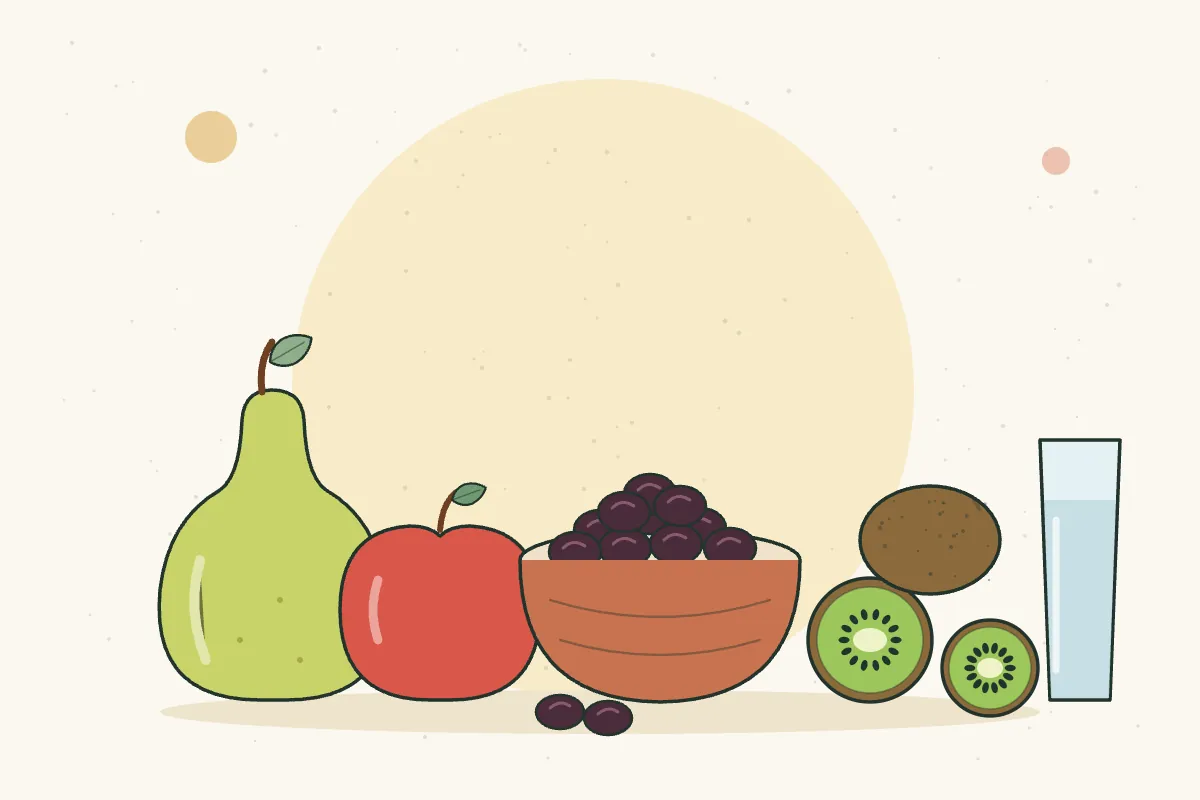
Prunes, kiwifruit and pears are three fruits with good reasons, and in two cases clinical trials, behind their reputation for easing occasional constipation. They combine fiber with natural compounds such as sorbitol that draw water into the bowel and soften stool. Fruit works best together with enough fluids and daily movement, and it takes a few days, not a few hours.
The short version
- Prunes: in trials they softened stool and increased bowel movements, performing about as well as a common fiber supplement.
- Kiwifruit: two green kiwis a day improved bowel habits in several studies, with few side effects.
- Pears (and apples): fiber plus sorbitol and fructose, which have a mild natural laxative effect, especially in juice.
- Increase fiber slowly, drink more water and stay active. Get checked for blood in the stool, weight loss, severe pain or a lasting change in bowel habits.
Why fruit helps with constipation
Constipation usually means fewer than three bowel movements a week, or hard, dry stool that is difficult to pass. Common causes include too little fiber, too little fluid, inactivity, travel, ignoring the urge to go and certain medicines.
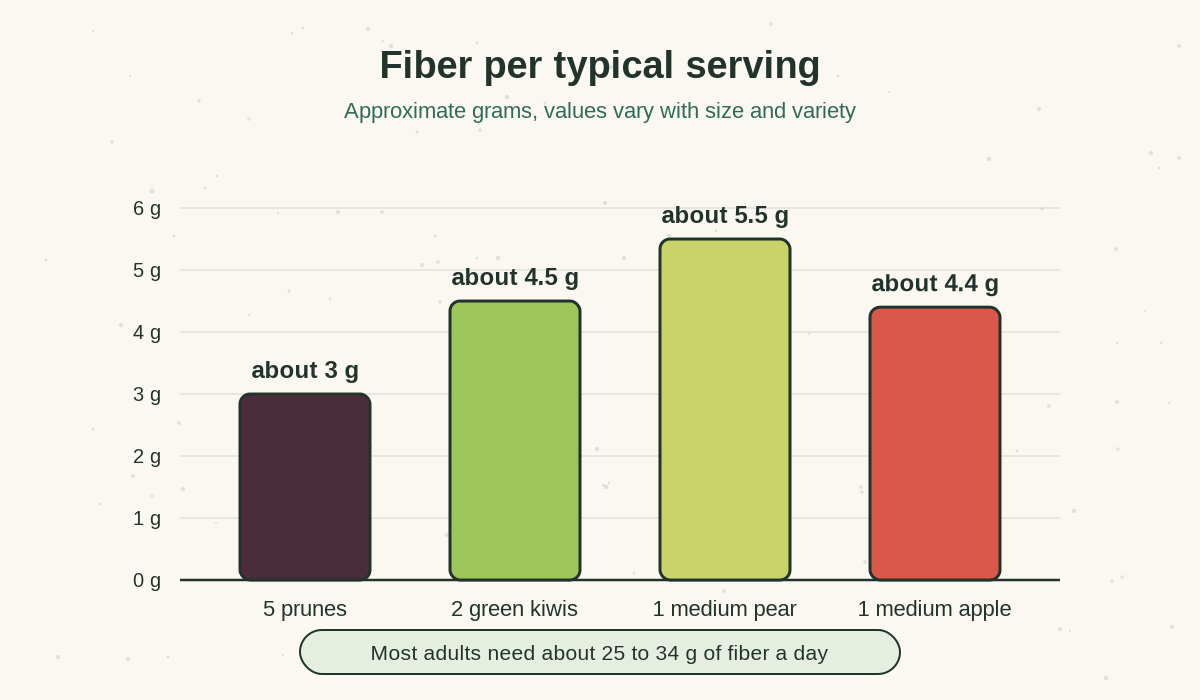
Fruit helps in three ways. Soluble fiber holds water and makes stool softer. Insoluble fiber, found mostly in skins and seeds, adds bulk and helps things move along. And some fruits contain sorbitol, a sugar alcohol the small intestine absorbs poorly, so it pulls water into the colon. Most adults need roughly 25 to 34 grams of fiber a day, and the majority of Americans get far less.
1. Prunes
Prunes (dried plums) are the classic choice, and for good reason. A serving of about five prunes provides around 3 grams of fiber plus sorbitol and polyphenols. In clinical trials, people with constipation who ate prunes daily had more frequent and softer bowel movements, with results at least as good as psyllium, a fiber supplement doctors often recommend.
How to eat them: start with 3 to 5 prunes a day as a snack or chopped into oatmeal or yogurt. Prune juice also works because it keeps the sorbitol, though it has little fiber. A small glass, about 4 ounces (120 ml), is plenty to start with.
2. Kiwifruit
Kiwifruit has become one of the best-studied foods for constipation. In several trials, including a comparison with prunes and psyllium in US adults, eating two green kiwis a day for four weeks increased the number of complete bowel movements and reduced straining. People also reported less bloating than with some other options. Kiwis contain about 2 to 3 grams of fiber each, an enzyme called actinidin and fiber that holds a lot of water.
How to eat them: two ripe green kiwis a day, for example one at breakfast and one in the afternoon. Halve and scoop them with a spoon, or eat the skin for extra fiber after washing it well. Gold kiwis are sweeter and have somewhat less fiber.
3. Pears (and apples)
A medium pear with the skin provides around 5 to 6 grams of fiber, one of the highest amounts among common fresh fruits. Pears also contain sorbitol and a high ratio of fructose, both of which pull water into the bowel. Apples work in a similar way, with about 4 grams of fiber in a medium apple with skin and the soluble fiber pectin.
How to eat them: one pear or apple a day, with the skin. Pear, apple and prune juices are often suggested for occasional constipation in children because of their sorbitol content. Ask your pediatrician about the right amount for your child, and never give juice to babies under 12 months without their advice.
Make it work: fiber, fluids and habits
- Go slowly. Add one extra fruit serving a day and build up over one to two weeks. A sudden jump in fiber can cause gas, bloating and cramps.
- Drink more. Fiber needs water to do its job. Have a glass of water with each fruit serving and drink regularly through the day, more in hot weather or when you exercise.
- Mix your sources. Vegetables, beans, lentils, oats, whole grains and seeds add more fiber. Our list of easy-to-digest foods helps if your stomach is sensitive.
- Move every day. A daily walk helps stimulate the bowel. Even 10 to 15 minutes after a meal can help.
- Do not ignore the urge. Give yourself unhurried time on the toilet, ideally after breakfast when the bowel is naturally more active. Resting your feet on a small stool so your knees are higher than your hips can make it easier.
Safety first
- Large amounts of prunes, prune juice or pears can cause gas, cramps and diarrhea. Start small.
- If you have irritable bowel syndrome, fruits high in sorbitol and fructose (prunes, pears, apples) can trigger bloating. Kiwi is often better tolerated.
- Kiwi allergy is not rare, especially in people allergic to latex. Stop eating it if your mouth itches or swells.
- People with kidney disease who need to limit potassium should ask their care team about prunes and kiwis.
- Check with a doctor before using laxatives regularly, and ask whether any of your medicines (such as opioids, iron or some antacids) might be causing constipation.
When to see a doctor
Occasional constipation is common and usually harmless. Get medical advice if you notice:
- Blood in the stool or black, tarry stool
- Unexplained weight loss, fatigue or signs of anemia
- Severe or worsening belly pain, a swollen belly or vomiting
- You cannot pass stool or gas
- A lasting change in your bowel habits, especially if you are 45 or older or have a family history of colon cancer
- Constipation that lasts more than three weeks despite diet changes
- Constipation in a baby, or in a child with pain, blood or poor feeding
Severe belly pain with vomiting and no gas or stool can signal a bowel blockage and needs emergency care.
Frequently asked questions
How fast do prunes work for constipation?
Some people notice a difference within a day, but in studies the benefits built up over one to several weeks of daily eating. Think of prunes as a regular habit rather than a quick fix.
Are kiwis or prunes better?
Both performed well in trials. Prunes may work a bit more strongly for some people, while kiwis tend to cause less gas and bloating. Try one and see how your body responds.
Does fruit juice help as much as whole fruit?
Prune, pear and apple juices contain sorbitol and can help, but they lack most of the fiber and add sugar. Whole fruit is the better everyday choice.
Sources
- National Institute of Diabetes and Digestive and Kidney Diseases: Eating, diet and nutrition for constipation, and Symptoms and causes of constipation
- American Journal of Gastroenterology: 2021 comparative trial of green kiwifruit, psyllium and prunes in US patients with chronic constipation
- Mayo Clinic: Constipation, diagnosis and treatment
- US Department of Agriculture, FoodData Central: fiber content of prunes, kiwifruit, pears and apples
- US Department of Agriculture and Department of Health and Human Services: Dietary Guidelines for Americans, dietary fiber
Comments
No comments yet. Tried this at home? Tell us how it went.