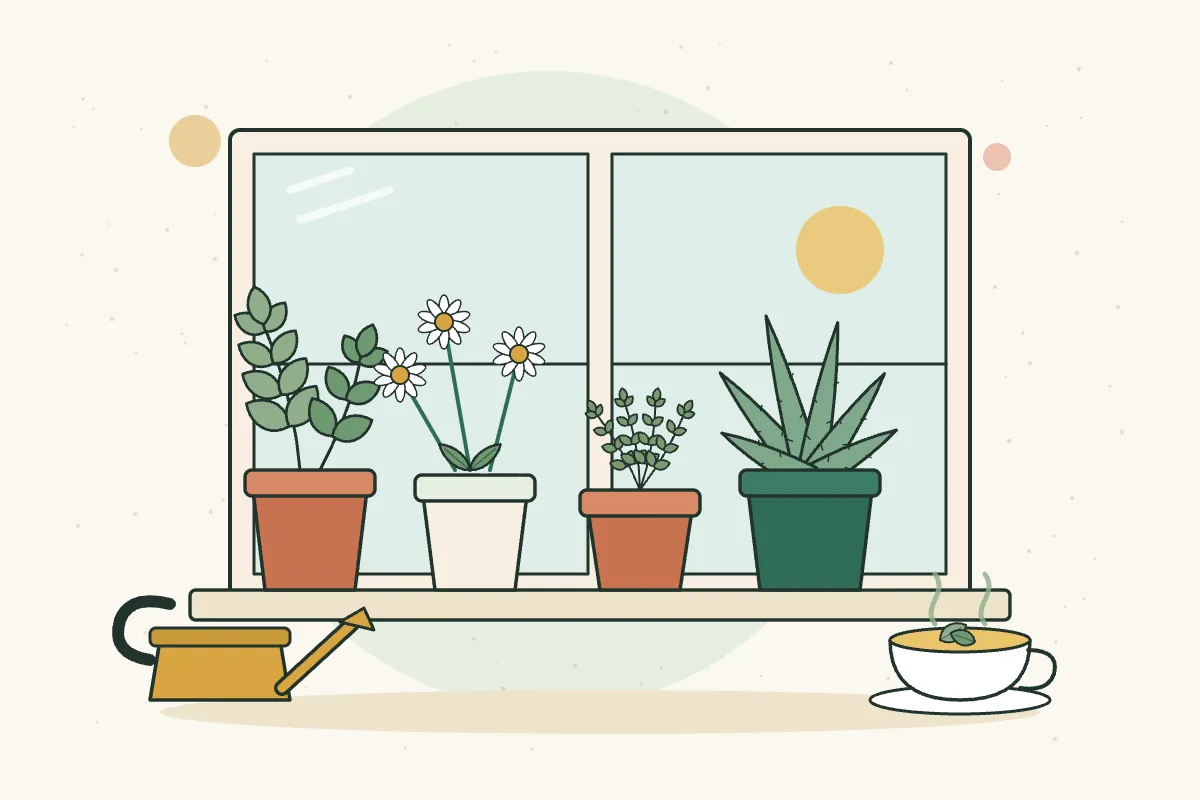
Many of the plants people call "medicinal herbs" are simply kitchen and tea herbs: mint, lemon balm, chamomile, thyme, sage and their relatives. Most of them grow well indoors if they get enough light, the right pot and not too much water. A windowsill garden gives you fresh leaves for tea and cooking all year. Just keep expectations realistic: a cup of homegrown tea is a comforting ritual, not a treatment for disease.
The short version
- Light is the deciding factor. Aim for at least 6 hours of direct sun, or use an LED grow light.
- Use pots with drainage holes and fresh potting mix, never garden soil.
- Easiest starters: mint, lemon balm, chives, parsley and thyme.
- Many common herbs are toxic to cats and dogs. Place pots out of reach.
- Check with a doctor before using herbal teas regularly if you are pregnant or take medication.
Step 1: Get the light right
Herbs bred for Mediterranean sun, like thyme, rosemary, oregano and sage, struggle on a dim windowsill. A south-facing window is best in the US, followed by west. East and north windows usually give too little light in winter, and the plants grow pale and leggy.
If you do not have a bright window, a full-spectrum LED grow light makes indoor herbs far easier. Hang it about 6 to 12 inches (15 to 30 cm) above the plants and run it 12 to 16 hours a day with a simple outlet timer. Turn pots on a windowsill a quarter turn every few days so they grow evenly.
Step 2: Pots, soil and water
- Choose pots with holes. Drainage is not optional. Terracotta dries faster and suits thyme, rosemary and sage; plastic or glazed pots hold moisture better for mint, parsley and basil.
- Use potting mix. A good indoor potting mix drains well. For Mediterranean herbs, mix in about a quarter perlite or coarse sand.
- Water by feel. Push a finger into the soil. Water Mediterranean herbs when the top inch (2.5 cm) is dry; keep mint, parsley and lemon balm evenly moist but never soggy. Empty saucers after 15 minutes.
- Feed lightly. A half-strength liquid fertilizer once a month during spring and summer is enough. Heavily fed herbs grow fast but taste milder.
- Keep the temperature steady. Most herbs like 60 to 75°F (16 to 24°C). Keep them away from heater vents, cold drafty glass in winter and fruit bowls (ripening fruit releases ethylene, which can stress plants).
The best herbs to grow indoors
Mint (peppermint and spearmint)
The easiest herb of all, and the classic tea leaf. Give it its own pot, because it spreads aggressively. Peppermint tea is widely used for an upset stomach after meals; most of the research on digestive benefits involves peppermint oil capsules, not tea, so think of the tea as soothing rather than proven. Peppermint can make heartburn worse in some people. More on the oil in our peppermint oil guide.
Lemon balm
A mint relative with a gentle lemon scent that tolerates a bit less light than most herbs. It makes a pleasant evening tea. Small studies have looked at lemon balm for sleep and mood, often combined with other herbs, but the evidence is limited.
German chamomile
Chamomile grows from seed in a deep pot and needs lots of light to flower. Harvest the flowers when they are fully open and dry them for tea. Indoors you will get a modest harvest, enough for a few cups. Chamomile is one of the most popular calming teas, though NCCIH notes that research on it is still limited. People allergic to ragweed, daisies or related plants may react to it.
Thyme, sage and oregano
Compact, fragrant and useful in the kitchen. All three like bright light and dry soil between waterings. Thyme and sage tea with honey is a traditional comfort drink for a scratchy throat; it may feel soothing, but it does not shorten a cold.
Chives and parsley
Not tea herbs, but some of the most productive plants on a windowsill. Parsley grows a long taproot, so give it a deeper pot.
Aloe vera
Technically a succulent, and the easiest plant here: bright light, water only when the soil is completely dry. The clear gel inside the leaf is a traditional after-sun soother; see our guide to soothing sunburn for when that makes sense. Do not eat aloe or use the yellow latex under the skin, which is a strong laxative.
Harder indoors: basil, rosemary and lavender
Basil needs warmth and a lot of light and often sulks in winter without a grow light. Rosemary dislikes dry indoor air and wet roots and is prone to powdery mildew. Lavender rarely flowers well inside. They can work under strong grow lights, but they are not the best first plants.
Harvesting and using your herbs
Snip stems just above a pair of leaves, which encourages bushier growth. Never take more than about a third of the plant at once. For fresh tea, pour hot water over a small handful of leaves, cover the cup so the aroma stays in, and steep 5 to 10 minutes. To dry herbs, hang small bundles upside down in a warm, airy spot away from sun, then store the crumbled leaves in a closed jar.
Common indoor pests
Tiny flies around the soil are usually fungus gnats, a sign of soil that stays too wet. Let it dry out more between waterings. Fine webbing and speckled leaves point to spider mites, which love dry indoor air; rinse plants in the shower and wipe leaves.
Safety first
- Pets: the ASPCA lists several common herbs, including mint, chamomile, oregano and aloe, as toxic to cats and dogs. Check its plant database before you bring a new herb home, and keep pots where pets cannot chew them.
- Pregnancy and breastfeeding: many herbs have not been well studied in pregnancy. Ask your doctor or midwife before drinking herbal teas regularly.
- Medications: herbs can interact with drugs. Chamomile, for example, may interact with blood thinners such as warfarin. Tell your doctor or pharmacist about herbal teas you drink often.
- Identification: only use plants you bought labeled or are completely sure about.
- See a doctor for symptoms that last more than a couple of weeks, a fever over 103°F (39.4°C), trouble breathing, chest pain, blood in stool or severe abdominal pain. Herbal tea is not a substitute for medical care.
Frequently asked questions
Can I grow herbs indoors all winter?
Yes, especially mint, chives, parsley and lemon balm. Expect slower growth from November to February unless you add a grow light.
Why are my indoor herbs tall and floppy?
That is called legginess, and it almost always means too little light. Move the pot to a brighter window or add a grow light, then pinch back the stems.
Can I grow herbs from grocery store pots?
Yes, but those pots are usually crowded with many seedlings. Divide the clump into three or four smaller groups and repot them, and they will last much longer.
Sources
- National Center for Complementary and Integrative Health (NCCIH): Chamomile, Peppermint Oil, Lemon Balm fact sheets
- University of Minnesota Extension: Growing herbs indoors
- Penn State Extension: Growing herbs indoors under lights
- ASPCA Animal Poison Control: Toxic and non-toxic plants list
- Mayo Clinic: Herbal supplements, what to know before you buy
Comments
No comments yet. Tried this at home? Tell us how it went.