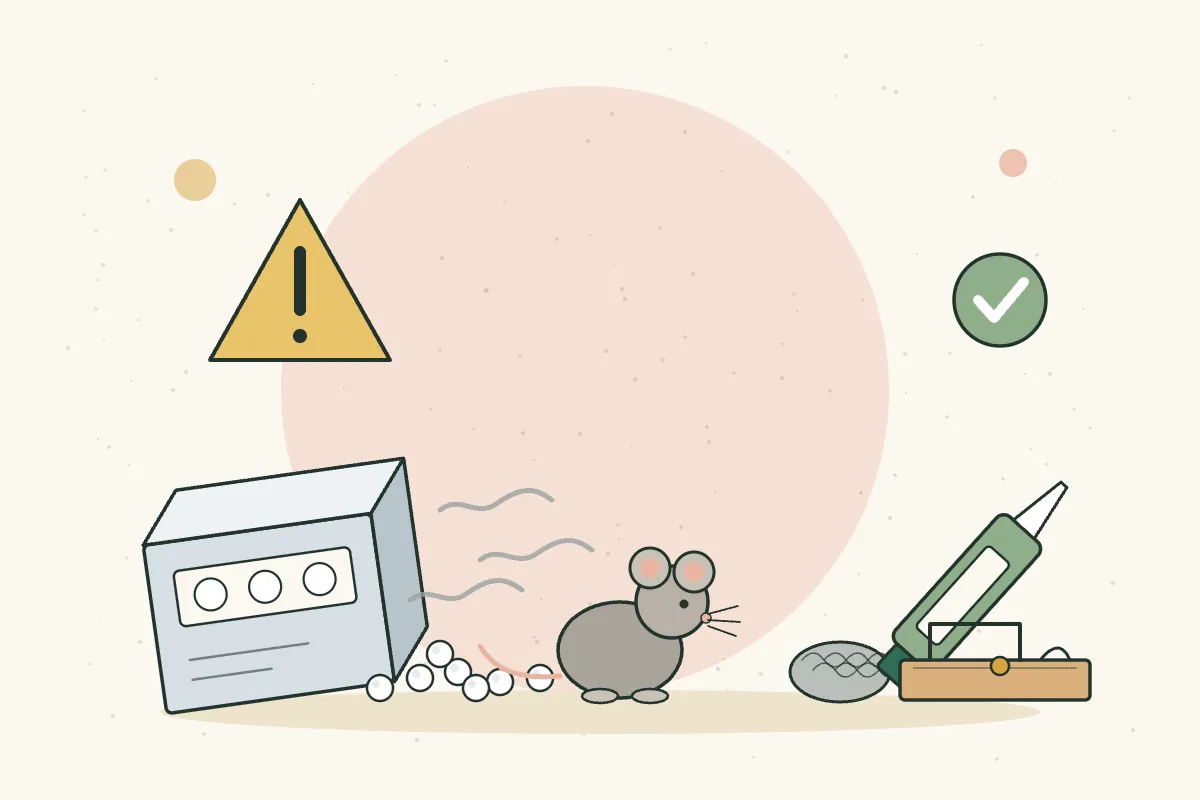
Mothballs are a poor and risky way to get rid of mice. They are a registered pesticide meant for killing clothes moths inside closed containers, and using them loose in attics, cupboards or crawl spaces to chase off rodents goes against the label. In an open room the fumes rarely get strong enough to bother mice for long, yet they can still give people headaches and pose a real danger to children and pets. Here is why the trick persists, and what works instead.
The short version
- Mothballs contain naphthalene or paradichlorobenzene, both pesticides regulated by the US Environmental Protection Agency.
- The label allows use only in airtight containers against clothes moths. Using them against mice is off-label.
- In open spaces they do not reliably repel mice, but the vapors can harm people and pets.
- Sealing entry points, trapping and removing food is what actually solves a mouse problem.
What mothballs actually are
Mothballs are solid pesticide pellets that slowly turn into gas. Most products sold in the US contain one of two active ingredients: naphthalene or paradichlorobenzene. The gas builds up inside a sealed container such as a garment bag or storage chest, where it reaches a concentration that kills moths and their larvae.
Because they are pesticides, mothballs are registered with the EPA, and the label is a legal document. The National Pesticide Information Center points out that using mothballs in a way the label does not allow, for example scattering them in an attic, garden or under a house to repel animals, is not only risky but also illegal.
Why mothballs do not work well against mice
The idea sounds logical: the smell is strong to us, so it must drive mice away. In practice, several things get in the way.
- Open spaces dilute the gas. Mothballs work against moths because the vapor is trapped. In an attic, a kitchen cabinet or a crawl space it drifts away, so mice simply avoid the immediate spot or get used to it.
- Mice have strong reasons to stay. A warm, dry nest near food outweighs an unpleasant smell. Pest management guides from university extension services consistently describe odor repellents as short-lived and unreliable for rodents.
- The concentration that might bother mice is a problem for you. To make a space truly unbearable for rodents, you would need levels of vapor that are clearly unhealthy for the people living there.
Many homeowners report that mice simply walk past mothballs or even nest near them. The smell, meanwhile, lingers in insulation, fabrics and wood for a long time.
The health risks
Both mothball chemicals can irritate the eyes, nose and throat and cause headaches, dizziness and nausea, especially in poorly ventilated rooms. If you can smell mothballs strongly in a living space, you are breathing the pesticide.
- Naphthalene can damage red blood cells and cause a condition called hemolytic anemia. Newborns and people with an inherited condition called G6PD deficiency are particularly vulnerable. The EPA classifies naphthalene as a possible human carcinogen.
- Paradichlorobenzene is also considered a possible human carcinogen, and long or heavy exposure has been linked to effects on the liver and nervous system.
- Children and pets can mistake mothballs for candy or toys. Swallowing even one can cause serious poisoning, and dogs that eat mothballs need a vet right away.
Safety first
- If someone has swallowed a mothball, call Poison Control at 1-800-222-1222 right away, or 911 if the person is drowsy, has trouble breathing or seems confused.
- For a pet, call your vet or an animal poison control line immediately.
- Signs that need medical attention after exposure include pale or yellowish skin, dark urine, unusual tiredness, vomiting and confusion.
- If you already placed mothballs in an open area, wear gloves, collect them into a sealed bag, ventilate the space well and contact your local household hazardous waste program about disposal.
What to do instead
The CDC sums up rodent control in three words: seal up, trap up, clean up. That plan works, and none of it involves pesticide fumes in your living space.
1. Seal the entry points
A young mouse can fit through a gap about the width of a pencil. Inspect the foundation, the spots where pipes and cables enter the house, gaps around garage doors, dryer vents and attic vents. Fill small holes with steel wool and seal them with caulk. Use hardware cloth, metal flashing or cement for larger openings. Foam alone gets chewed through.
2. Trap the mice that are already inside
Snap traps are inexpensive, quick and show you whether the problem is solved. Bait them with a small amount of peanut butter and set them along walls where you see droppings, with the trigger end facing the wall. Use several traps at once and check them daily. Enclosed bait stations with poison are best left to professionals indoors, because poisoned mice can die inside walls and pets or wildlife may eat the bait.
3. Remove food and nesting spots
Store dry goods, pet food and birdseed in glass or metal containers with tight lids. Keep counters and floors free of crumbs, empty trash regularly and declutter garages and storage areas where mice like to nest.
If you want a scent-based deterrent
Peppermint oil on cotton balls is far safer than mothballs and can make a specific spot less attractive for a few days. It is no cure either, but it can be a small extra after sealing and trapping. Our guide on using peppermint oil against mice explains how, and the peppermint oil guide covers safe handling around pets.
Cleaning up after mice
Mouse droppings and urine can carry germs, including hantavirus in some regions. Do not sweep or vacuum them dry, because that stirs up dust. Air out the area for at least 30 minutes, put on gloves, spray the droppings with a disinfectant or a fresh bleach solution (about 1 part bleach to 10 parts water), let it soak for five minutes, then wipe it up with paper towels and seal them in a bag for the trash. Wash your gloved hands, then your bare hands.
When to call a professional
If you still find fresh droppings after two weeks of trapping, hear activity inside walls or ceilings, or find chewed wiring, contact a licensed pest control company. A good one will focus on inspection and exclusion, not just bait.
Frequently asked questions
Do mothballs keep mice out of a car or camper?
The same problems apply: the space is not airtight, the fumes build up where you breathe, and the smell lingers in upholstery. Sealing gaps, removing food and setting traps before storage works better.
Is it illegal to use mothballs for mice?
Pesticides must be used according to their label under federal law. Standard mothball labels only cover clothes moths in closed containers, so using them to repel rodents is a use the label does not allow.
How do I get the mothball smell out of my house?
Remove all mothballs, ventilate for several days, wash fabrics that can be washed, and leave open bowls of baking soda or activated charcoal in the area. Porous items like insulation may hold the odor for a long time.
Sources
- National Pesticide Information Center: Mothballs fact sheet
- US Environmental Protection Agency: Using mothballs safely and effectively
- Agency for Toxic Substances and Disease Registry: ToxFAQs, Naphthalene
- Centers for Disease Control and Prevention: Rodents, Seal Up! Trap Up! Clean Up!
- University of California Statewide IPM Program: Pest Notes, House Mouse
Comments
No comments yet. Tried this at home? Tell us how it went.