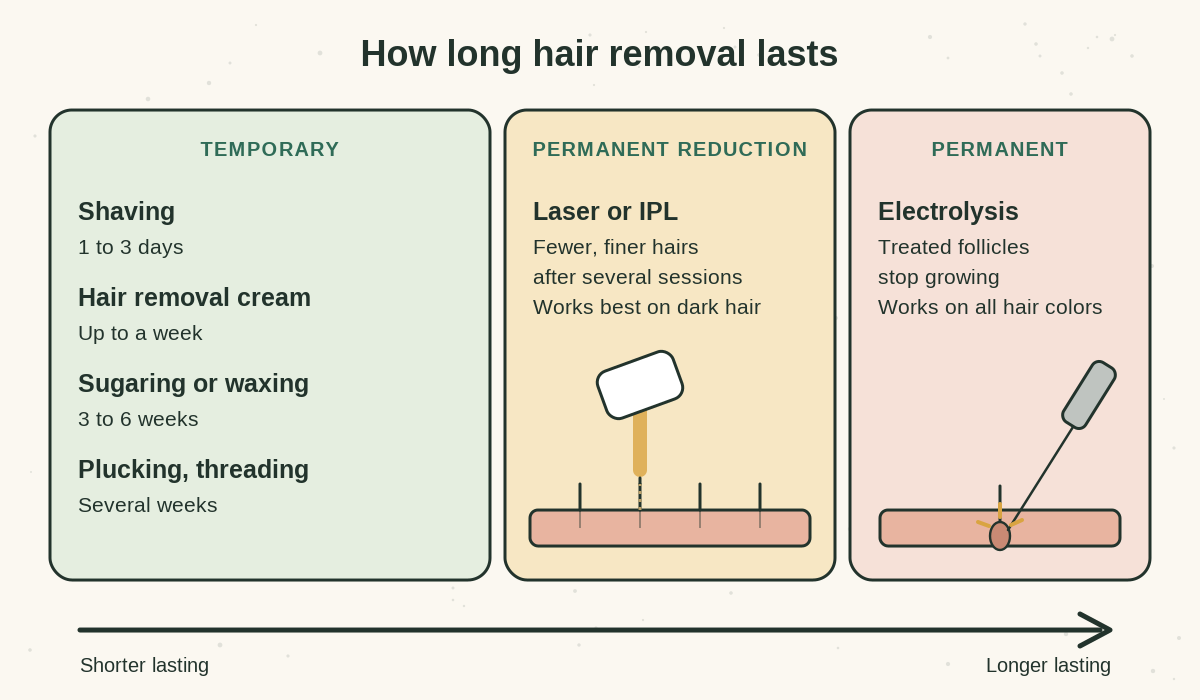
There is no natural home remedy that removes hair permanently. Sugaring, waxing, threading and plucking pull hair out at the root, and it grows back within weeks. The only method the US Food and Drug Administration recognizes as permanent hair removal is electrolysis. Laser hair removal is cleared as permanent hair reduction, which means fewer and finer hairs, not none. Natural methods are still useful; you just need to know what you are getting.
The short version
- Electrolysis destroys individual hair follicles and is the only method recognized as permanent.
- Laser and IPL reduce hair growth over many sessions, but some hair usually returns.
- Sugaring is a gentle, natural option that lasts about three to six weeks.
- Pastes with turmeric, papaya or egg are not proven to stop hair growth.
- Sudden new hair on the face, chest or back in women can be a medical sign. See a doctor.
Permanent, reduction or temporary?
Marketing blurs three different things. It helps to keep them apart.
- Permanent removal means a treated follicle no longer grows hair. Electrolysis achieves this by passing a tiny current through a fine probe into each follicle. It works on all hair and skin colors, but it treats one hair at a time, so larger areas take many sessions over months.
- Permanent reduction means a lasting drop in the number of hairs after a series of treatments. That is the FDA-cleared claim for many lasers. Results are best on dark hair and lighter skin. Blond, red, gray and white hair respond poorly because the laser targets pigment.
- Temporary removal covers everything from shaving to sugaring. Hair grows back, although methods that pull hair from the root give you more time between sessions.
Sugaring: the best natural option
Sugaring uses a thick paste of sugar, lemon juice and water. It removes hair from the root like wax, but the paste sticks mainly to hair rather than skin, so many people find it less irritating. It rinses off with warm water. Results usually last three to six weeks, and some people notice softer regrowth over time, though there is no good evidence that it permanently reduces hair.
- Cook the paste. In a heavy saucepan, combine 2 cups (400 g) of white sugar, 1/4 cup (60 ml) of lemon juice and 1/4 cup (60 ml) of water. Heat over medium, stirring until the sugar dissolves, then let it simmer without stirring until it turns the color of honey or light amber, usually 7 to 12 minutes.
- Cool it properly. Pour the paste into a heat-proof glass jar and let it cool for at least 30 minutes until it is warm, not hot. Hot sugar sticks to skin and causes serious burns.
- Test the temperature. Touch a small amount to the inside of your wrist. It should feel comfortably warm.
- Prepare the skin. Clean, dry skin works best. Dust with a little cornstarch. Hair should be about 1/4 inch (6 mm) long.
- Apply and flick. Take a walnut-sized ball, spread it against the direction of hair growth, then pull it off quickly in the direction of growth while holding the skin taut. Reuse the same ball until it gets too sticky.
- Aftercare. Rinse with lukewarm water. Skip hot baths, tight clothing, exfoliation and the sun for a day.
If the paste goes wrong
Too runny means it was not cooked long enough: warm it again briefly. Too hard and brittle means it was overcooked: add a spoon of water and warm it gently. It takes a few tries to get right, so start on the lower legs, not the face.
Popular "natural permanent" remedies, checked
Turmeric paste
Turmeric is part of traditional beauty routines in South Asia, often mixed with chickpea flour. Rubbing it in may help loosen fine hair over time, but there is no evidence that it stops hair from growing. It also stains skin yellow for a while.
Papaya and other "enzyme" masks
Raw papaya contains papain, an enzyme that breaks down protein. The idea is that it weakens hair. Studies showing a lasting effect on hair growth from a kitchen papaya mask are lacking, and papain can irritate sensitive skin.
Egg white masks
An egg white mask dries into a film that pulls off some fine facial hair. It is temporary at best.
Spearmint tea
A few small studies in women with hormonal excess hair suggested that spearmint tea may lower androgen levels slightly. Visible changes in hair were small or unclear. It is not a removal method, and anyone with excess hair growth should have the cause checked first.
Gentle aftercare for any method
Exfoliate gently a few times a week once the skin has settled, to reduce ingrown hairs. Fragrance-free moisturizer helps. If you shave in between sessions, our guide on how to prevent razor burn covers technique. A homemade coconut oil sugar scrub works on legs, but leave at least two days between hair removal and scrubbing.
Safety first
- Burns: cooked sugar is far hotter than boiling water. Keep children and pets out of the kitchen while it cooks and always test on your wrist.
- Do not sugar or wax skin that is sunburned, broken, inflamed, or treated with retinoids, prescription acne medicine or a recent chemical peel. The skin can tear.
- Diabetes and poor circulation: slow healing raises the risk of infection. Ask your doctor before root removal methods on the legs.
- Laser at home or in a spa: burns, blisters and pigment changes are possible, especially on darker skin with the wrong device. Choose a provider supervised by a physician, and never point any device near the eyes.
When excess hair needs a doctor
Coarse dark hair appearing on the face, chest, back or belly in women, a condition called hirsutism, can be linked to polycystic ovary syndrome, other hormone disorders or medications. See a doctor if new hair growth comes on quickly, or if it comes with irregular periods, severe acne, a deeper voice, thinning hair on the head or weight gain. Treating the cause often slows growth, and a prescription cream for facial hair is available that a doctor can discuss with you.
Frequently asked questions
Is any natural hair removal permanent?
No. All natural methods are temporary. Electrolysis is the only method recognized as permanent, and laser is considered permanent reduction.
How long does sugaring last?
Usually three to six weeks, depending on your hair growth cycle and the body area.
Does plucking or waxing make hair grow back thicker?
No. Neither plucking, waxing nor shaving changes the thickness or color of hair. Regrowth can feel coarser because the tip is blunt, especially after shaving.
Sources
- US Food and Drug Administration: Removing Hair Safely
- American Academy of Dermatology: Hair removal, how to wax and laser hair removal
- Mayo Clinic: Hirsutism, symptoms and causes
- Phytotherapy Research: randomized trial of spearmint herbal tea in women with hirsutism
Comments
No comments yet. Tried this at home? Tell us how it went.